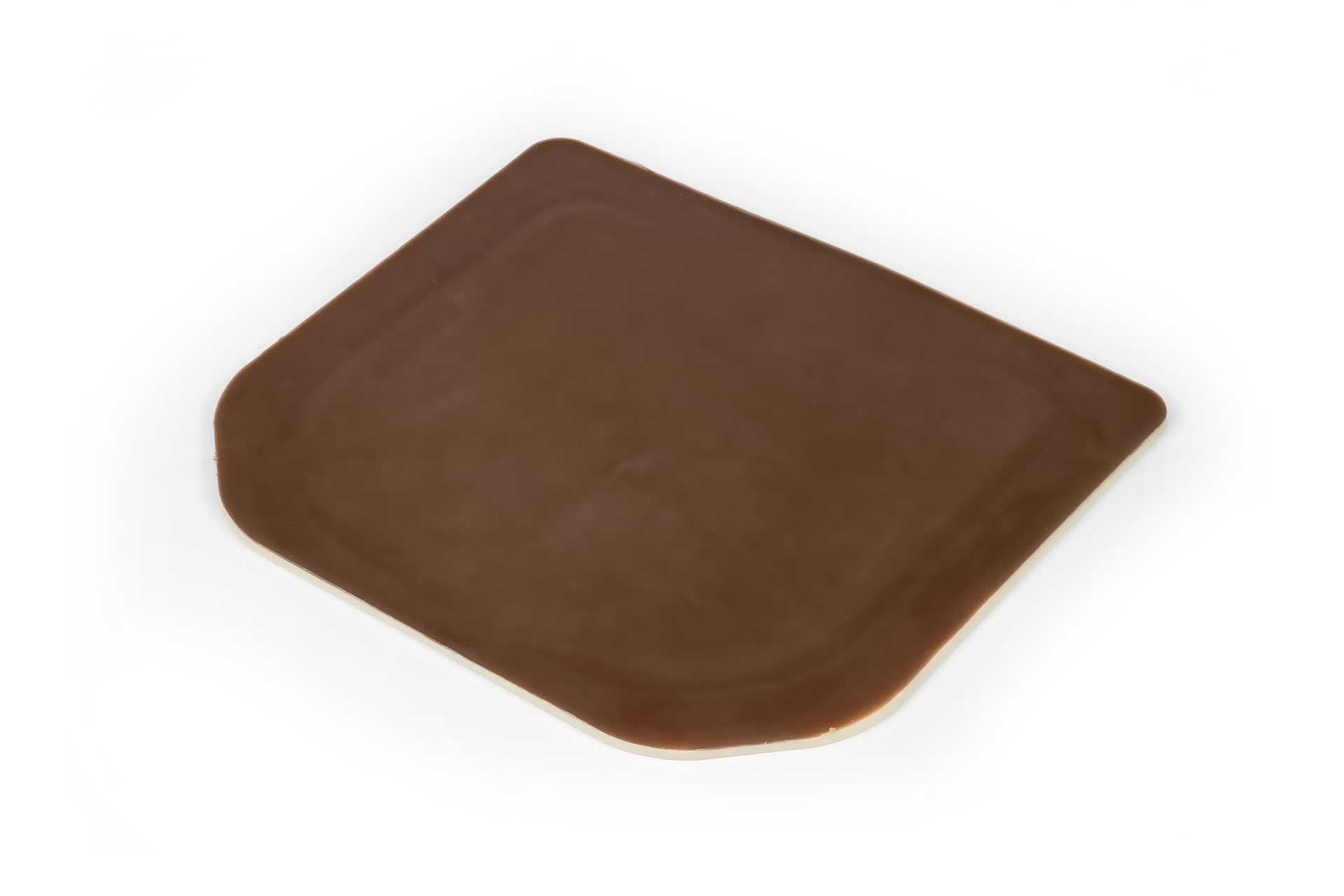
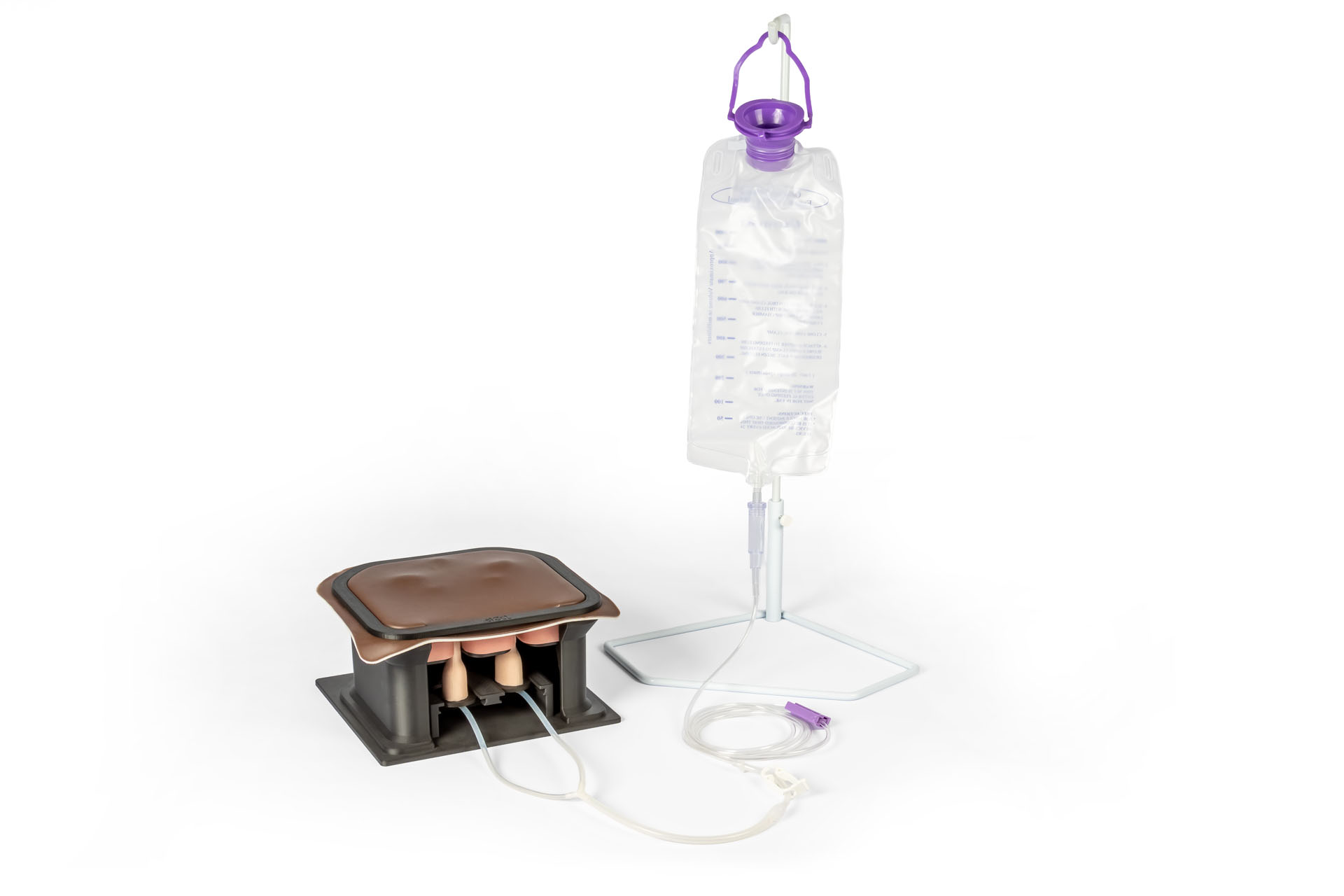
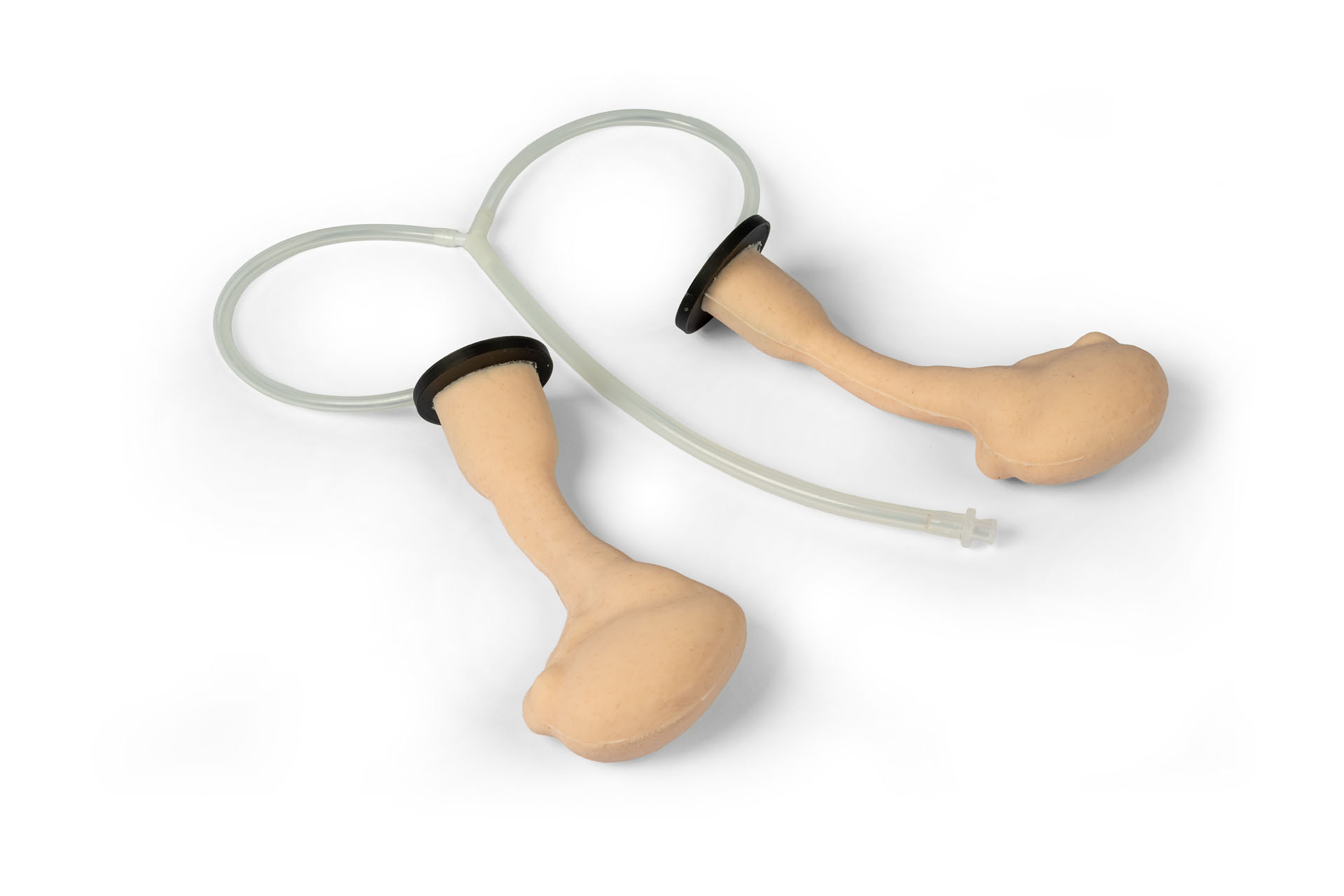
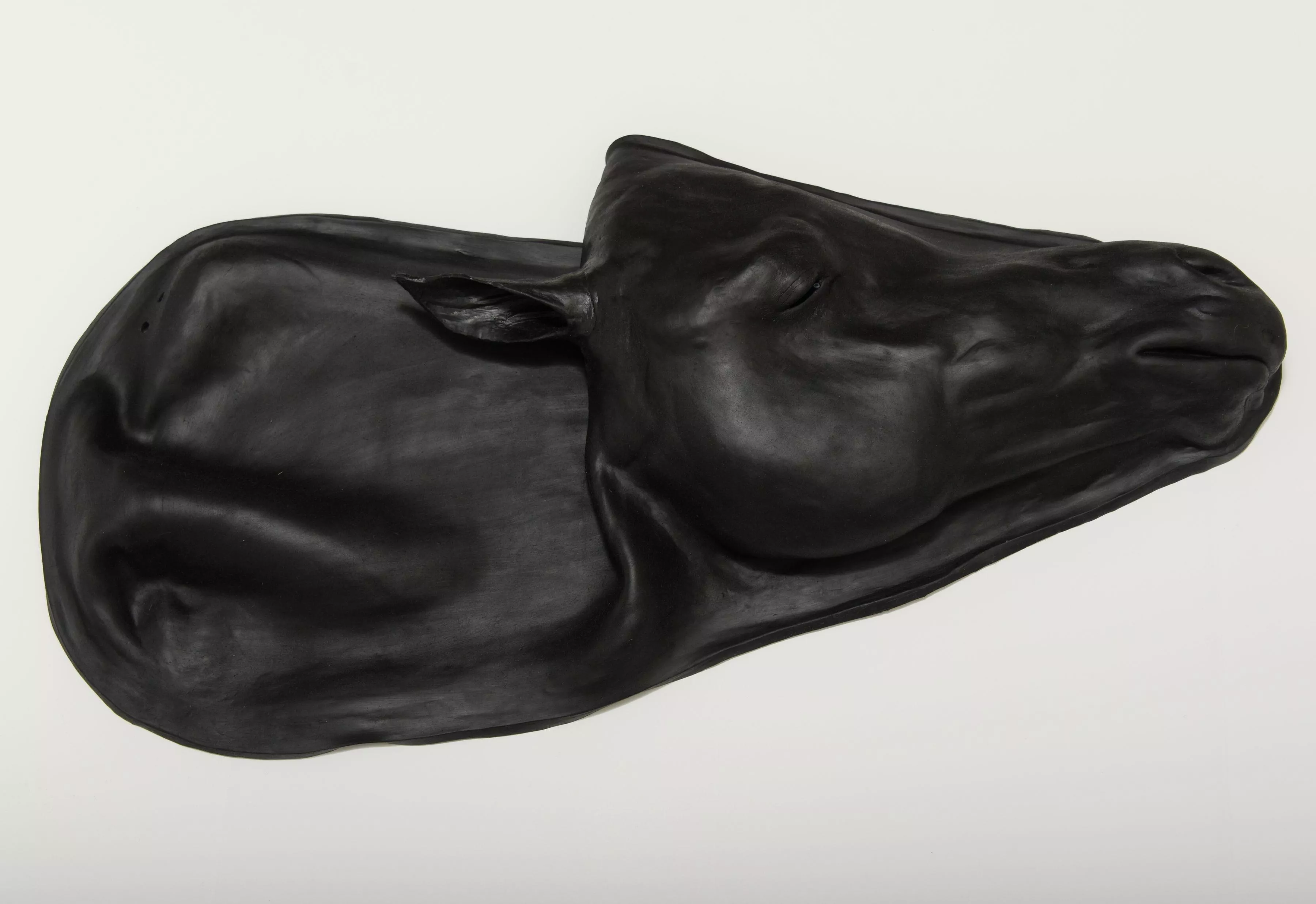
Le simulateur chirurgical de castration équine est un modèle de formation très réaliste conçu pour enseigner et évaluer l'intégralité de la procédure chirurgicale de castration équine fermée dans un environnement sûr, reproductible et contrôlé. Ce modèle comprend des modules testiculaires et spermatiques en silicone remplis de liquide, un boîtier analogue à celui des tissus et un système sanguin simulé alimenté par gravité pour valider l'hémostase. Les étudiants, techniciens et chirurgiens vétérinaires peuvent s'entraîner à chaque étape – de l'incision cutanée à la pose de ligatures et à l'utilisation de l'émasculateur – tout en recevant un retour immédiat sur la technique chirurgicale. Le système de rétention à déploiement rapide permet un changement rapide de module entre les utilisateurs, pour une formation efficace en grands groupes.
Contenu de la livraison :
- Simulateur de castration pour chevaux
- Poche à sang
- Support pour poche à sang
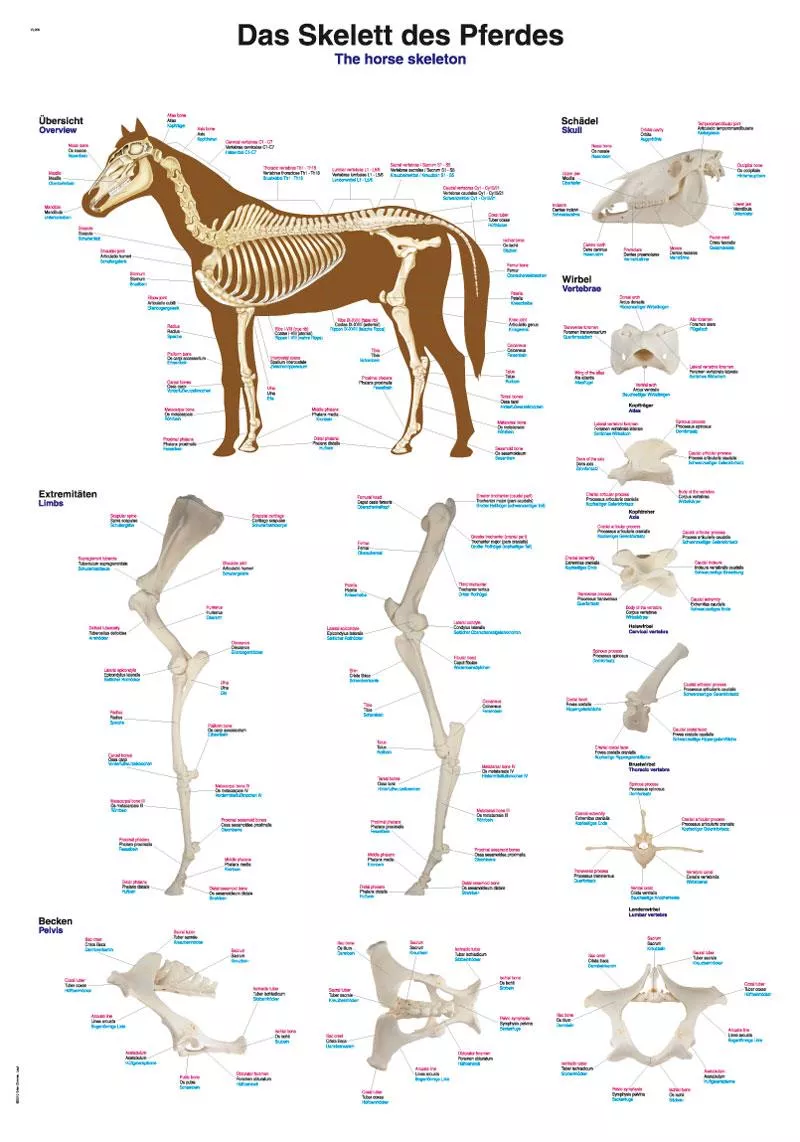
High Quality anatomical chart, made of 200g/sqm art paper, size 50x70cm, incl. attachable plastic rods with hanger. Nomenclature in German, English and Latin.
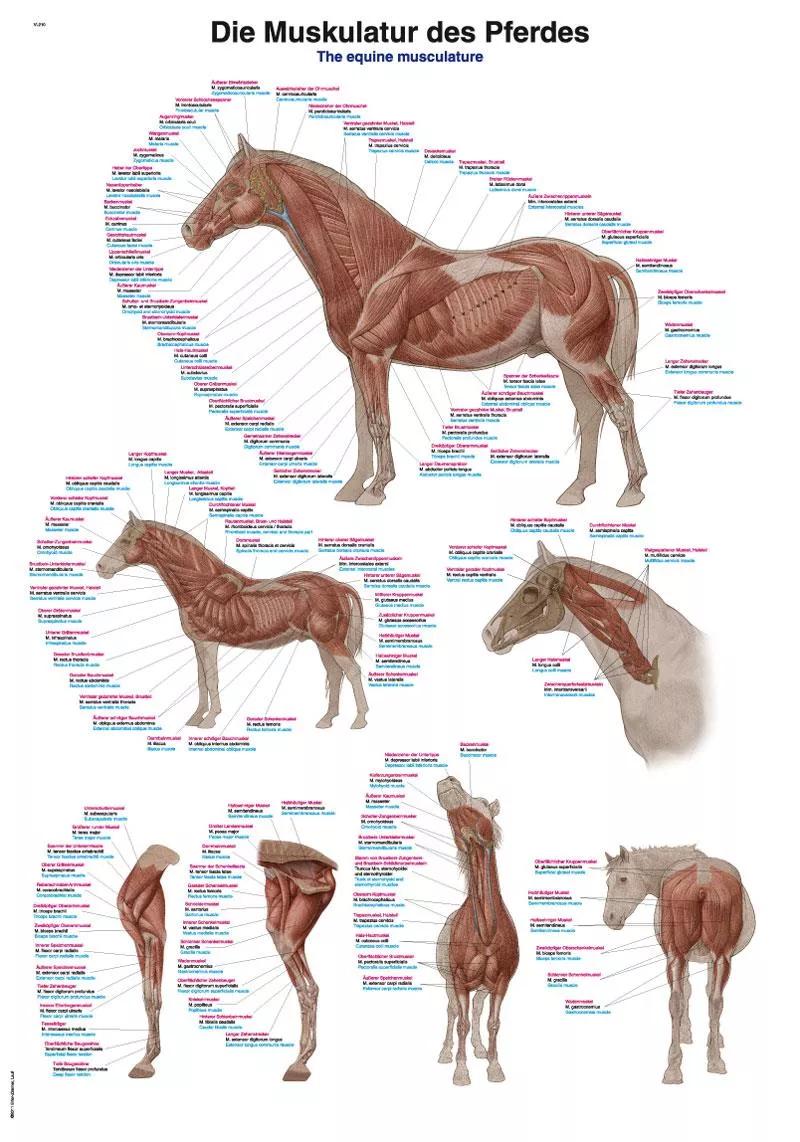
High Quality anatomical chart, made of 200g/sqm art paper, size 50x70cm, incl. attachable plastic rods with hanger. Nomenclature in German, English and Latin.
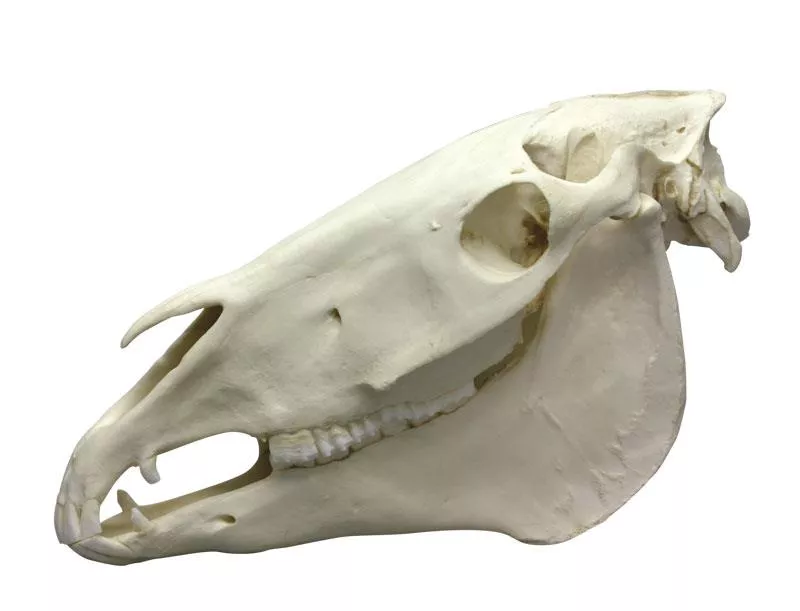
The large and slender horse skull has long, broad, tapering nasals. At the front of the mouth are large incisors, designed for cropping grass. At the back of the mouth are six large, squared molars on either side of the maxilla and the mandible. The area between the incisors and the molars is called the bar. In that space sits a canine tooth (not present in all horses). The eyes sit back far on the head, typical of grazing animals. The braincase is small. The original male specimen of this cast was a large retired police horse. 2-part skull (separate cranium & jaw).Size: 51 x 54 x 30 cm
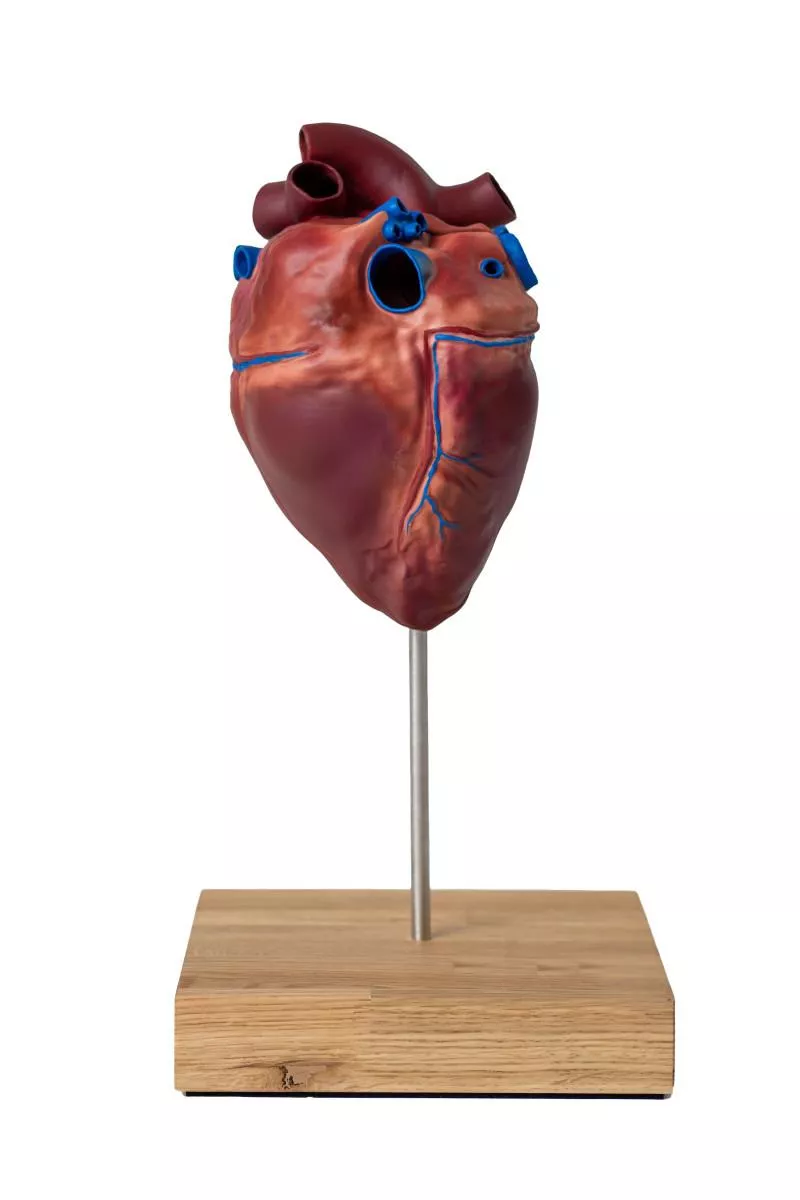
Modèle réduit du cœur d'un cheval. Il montre l'anatomie correcte du cœur du cheval, y compris : 2 oreillettes, les ventricules, les embouchures des principaux vaisseaux sanguins. Le modèle est en plastique dur.
Modèle réaliste de l'estomac d'un cheval. Il est divisé en deux parties, chacune représentant les structures internes et externes de l'estomac du cheval.
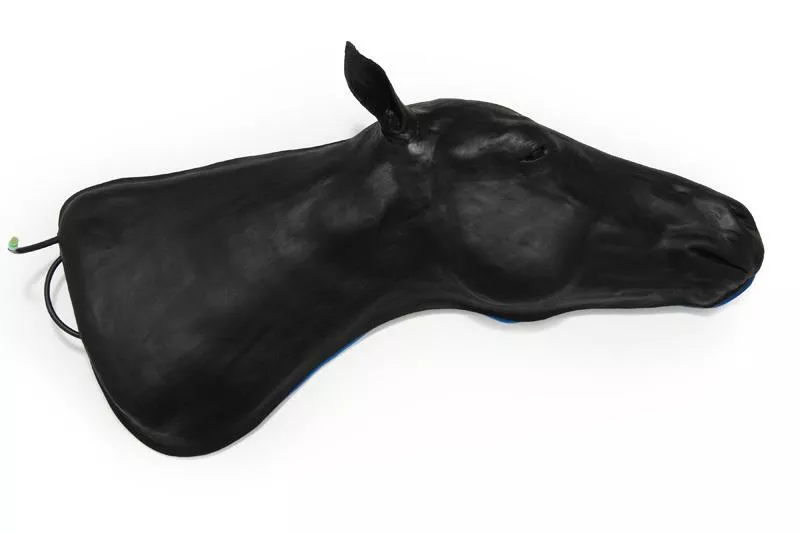
When looking to practice more advanced procedures for equine care, our Equine Simulator 1.0 provides students with many training opportunities. This comprehensive model will allow you to train on the following procedures: Intra-muscular Injections, Nasolacrimal Duct Flush, Placement of Subpalpebral Lavage System, Eye Nerve Blocks – Auriculopalpebral and Supraorbital Nerve, Teethe Nerve Blocks – Mental, Maxillary, and Infraorbital Nerve, Jugular Blood Draw and Catheter Insertion, Deep Facial Blood Draw, Transverse Facial Artery Blood Draw and Catheter Insertion. Included with your Equine Vascular Access Simulator is a 1000mL IV Bag and Artificial Blood Powder as well as instructions for set-up, maintenance, and use of the model.
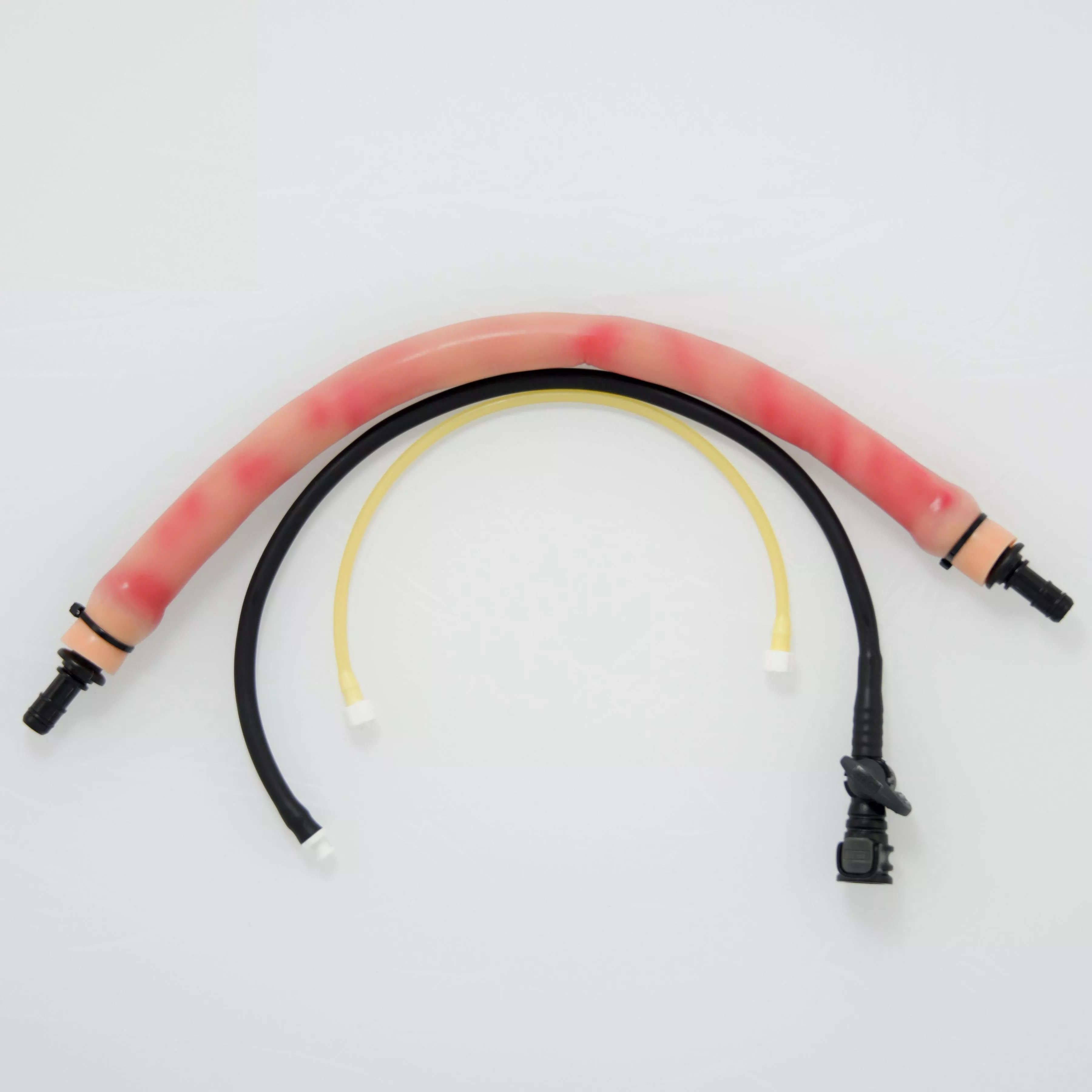
SurgiReal’s Replacement Vessel bundle keeps your Equine Simulator effective without the need to purchase a new simulator. Vessels work for both the Equine Vascular Access Simulator and the Equine Simulator 1.0. Replacement vessels included: Jugular Vein, Deep Facial Vein, Transverse Facial Artery
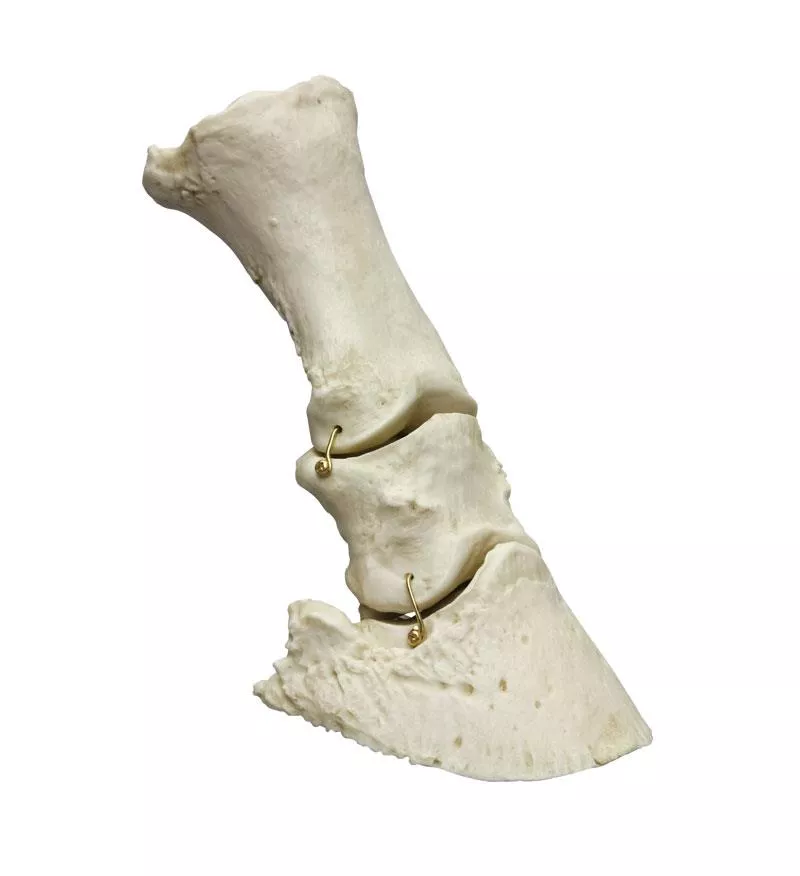
The foot consists of the long pastern bone (or first phalanx), the short pastern bone (or second phalanx) and the coffin bone (or third phalanx). The coffin bone is normally enclosed by the hoof (not included). Not shown are Ligaments, tendons, cushions and cartilage that contribute to the complicated structure of the horse's foot.Size: 9 x 8 x 16.5 cm
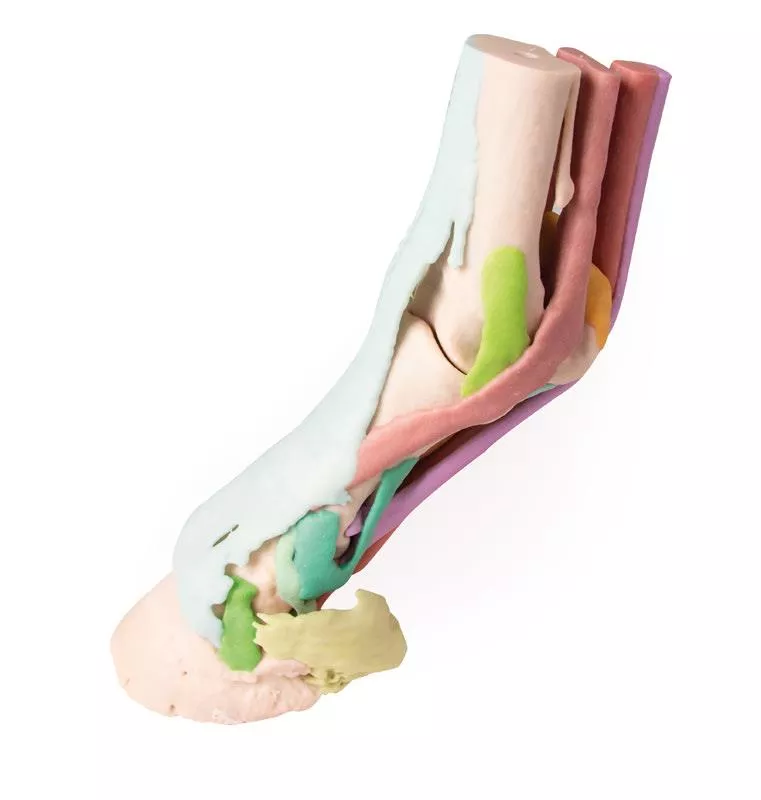
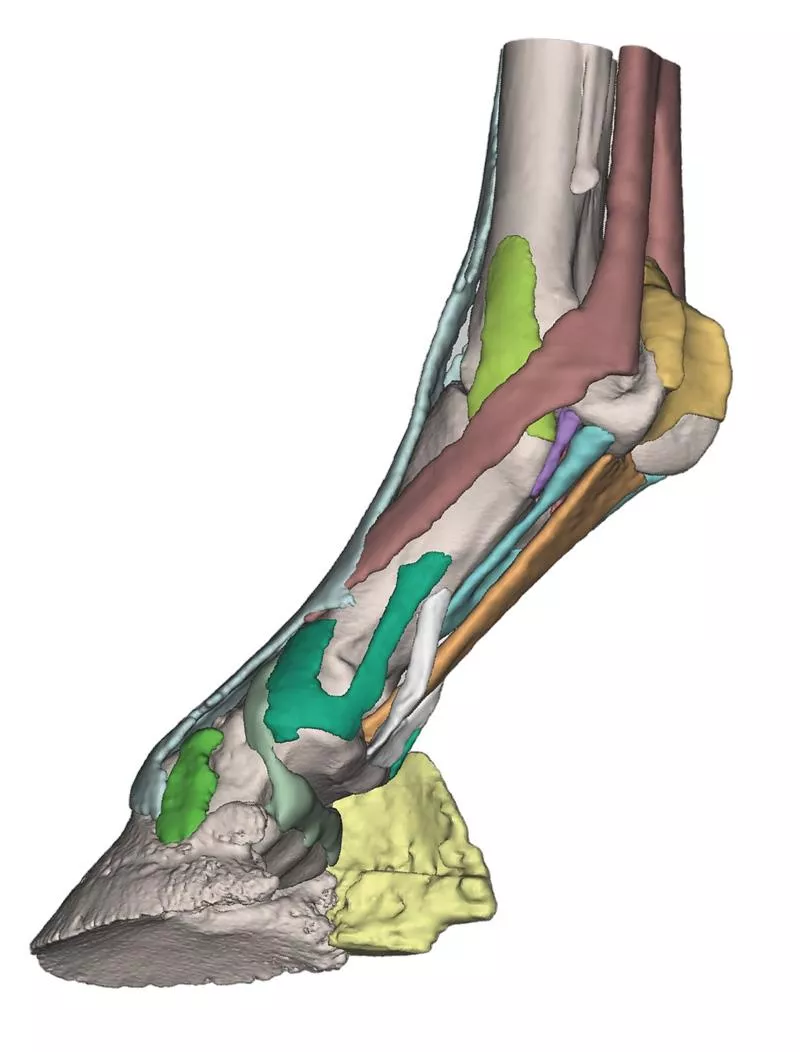
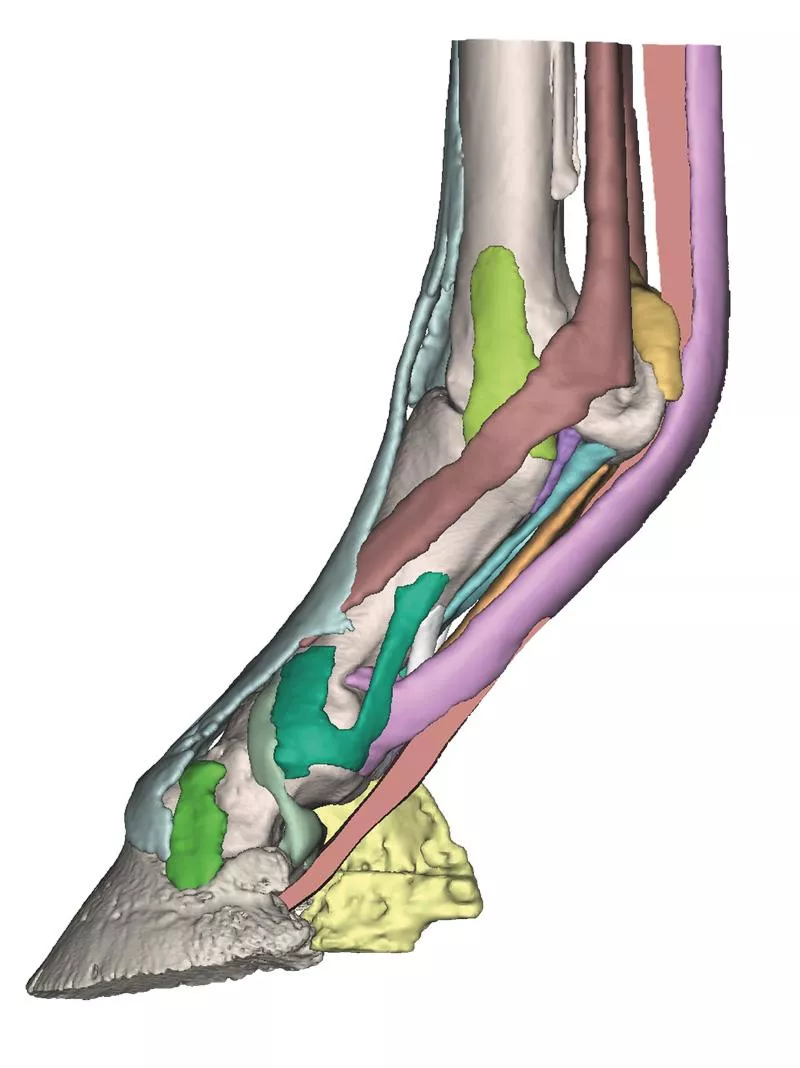
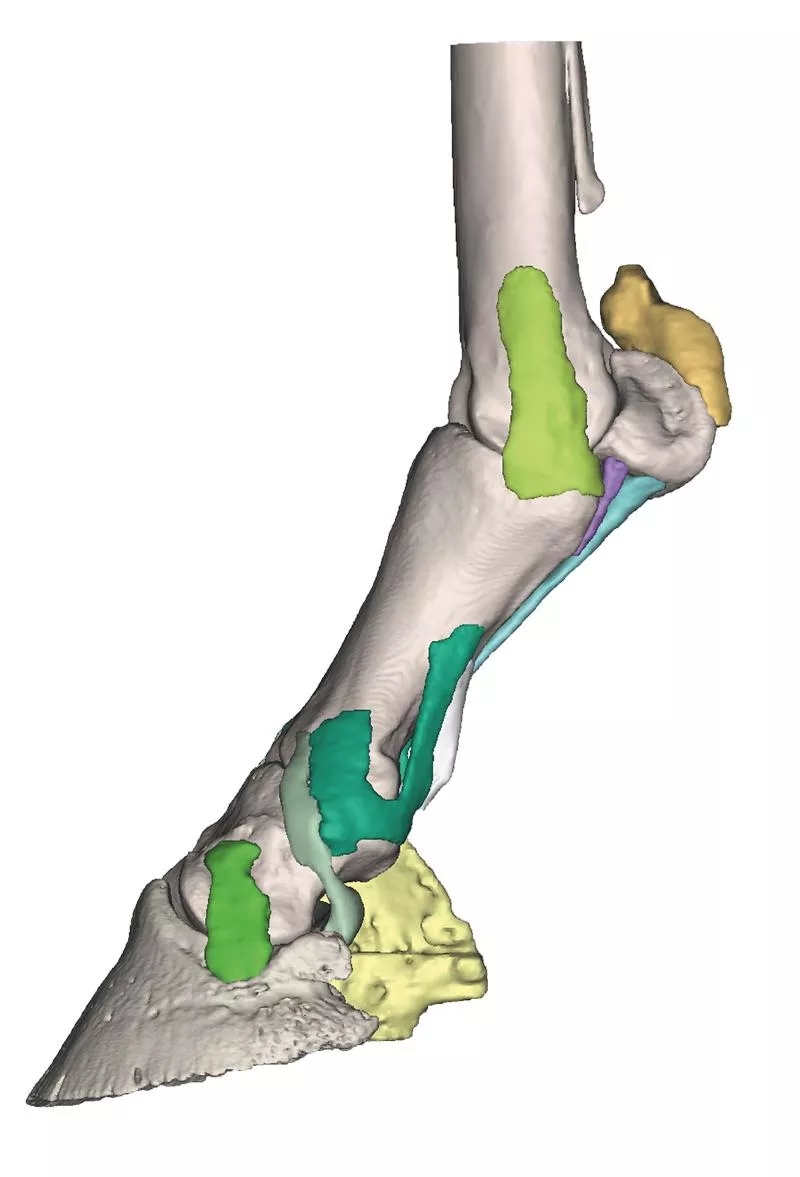
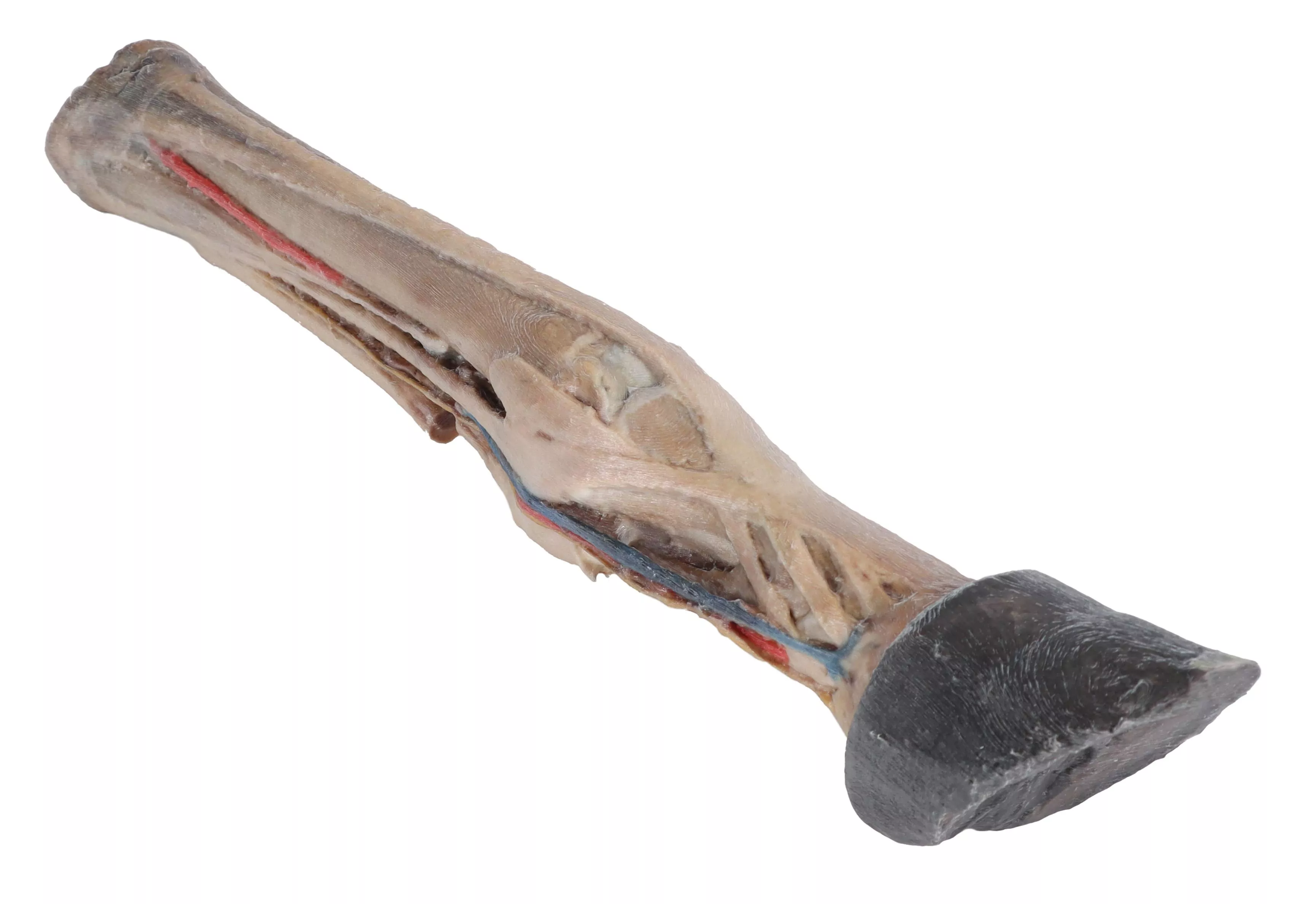
Derived from CT and MR co-registered data, anatomically accurate and lifesize. 3D printed in full color, each anatomical component is individually colored. Hoof capsule is available separately and anchors the distal limb in the stance position. The series consists of four models: starting from Model 1 showing the full anatomy of the foot and comprised of 25 anatomical structures to step-by-step reduced models showing deeper structures.Model 1:Structures: Third metacarpal bone; Proximal sesamoid bones; Proximal phalanx; Middle phalanx; Distal phalanx; Distal sesamoid (navicular) bone; Ungular cartilages; Collateral ligaments of the metacarpophalangeal joint; Collateral ligaments of the proximal interphalangeal joint and the abaxial palmar ligaments of the foot; Collateral ligaments of the distal interphalangeal joint; Collateral ligament of the distal sesamoid (navicular) bone; Distal sesamoidean impar ligament; Proximal scutum and intersesamoidean ligament; Cruciate sesamoidean ligament; Short sesamoidean ligaments; Oblique sesamoidean ligaments; Straight sesamoidean ligament; Axial palmar ligaments of the foot; Suspensory ligament and extensor branches; Deep digital flexor tendon; Superficial digital flexor tendon; Common digital extensor tendon.
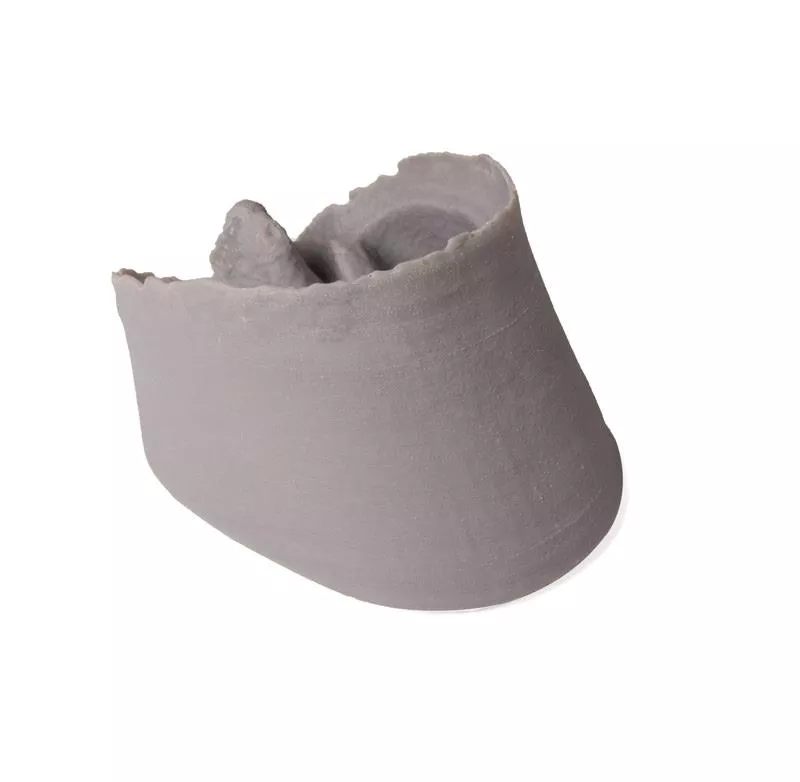
Derived from CT and MR co-registered data, anatomically accurate and lifesize. 3D printed in full color, each anatomical component is individually colored. Hoof capsule is available separately and anchors the distal limb in the stance position. The series consists of four models: starting from Model 1 showing the full anatomy of the foot and comprised of 25 anatomical structures to step-by-step reduced models showing deeper structures.Hoof Capsule:The corresponding hoof capsule is separate and anchors the distal limb in the stance position.Suitable for: VET4400, VET4410, VET4420 and VET4430.
The Replacement Bundle for the Equine Simulators includes all consumables except the skin (sold separately). Replacement Bundle works for both the Equine Vascular Access Simulator and the Equine Simulator 1.0. Jugular Vein, Deep Facial Artery, Transverse Facial Artery, Artificial Blood Powder, 1000mL IV Bag
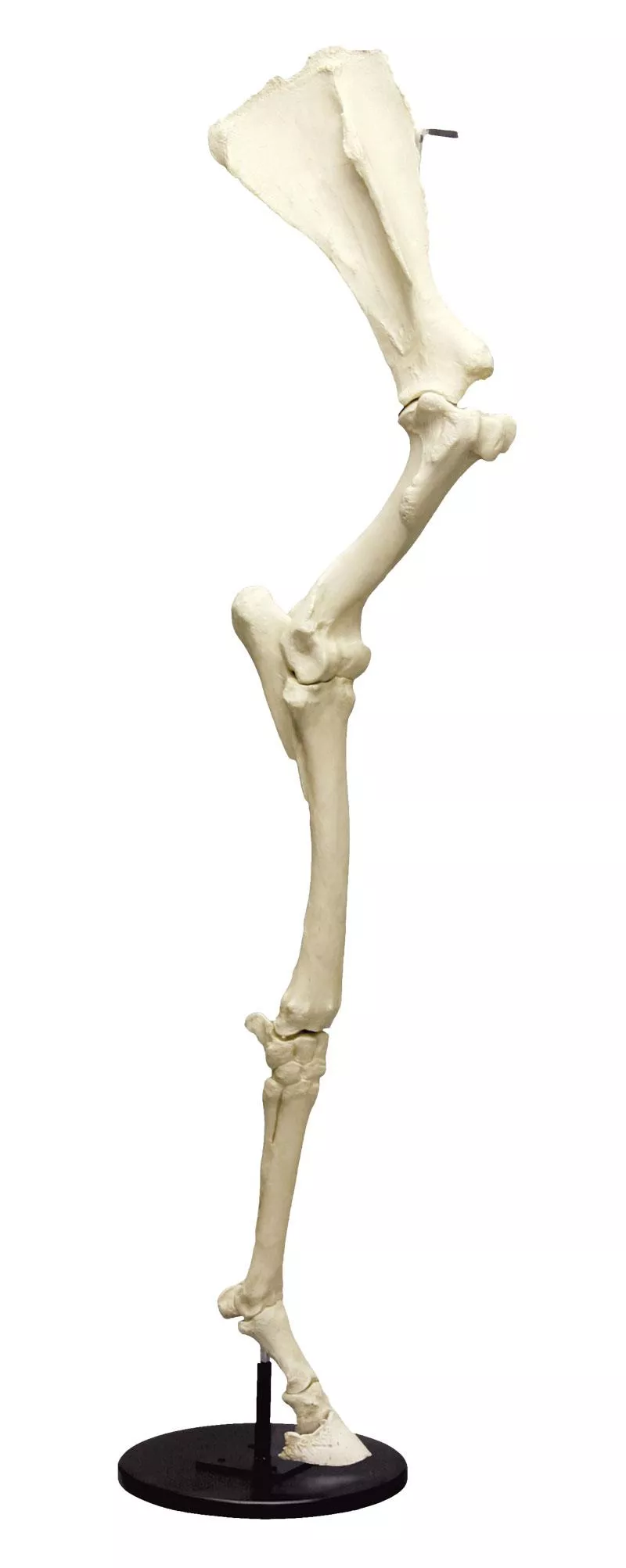
We include the scapula, humerus, forearm (fused radius and ulna), cannon bone and foot. The foot consists of the long pastern bone (or first phalanx), the short pastern bone (or second phalanx) and the coffin bone (or third phalanx). The coffin bone is enclosed by the hoof (not included).The horse is an unguligrade mammal. Such mammals walk on from four to only one digit (the horse's foot is really a single digit). The equivalent of the wrist or ankle joint is high above the ground. Such adaptations result in the ability to sustain high speeds.Height: 154 cm
Derived from CT and MR co-registered data, anatomically accurate and lifesize. 3D printed in full color, each anatomical component is individually colored. Hoof capsule is available separately and anchors the distal limb in the stance position. The series consists of four models: starting from Model 1 showing the full anatomy of the foot and comprised of 25 anatomical structures to step-by-step reduced models showing deeper structures.Model 2:As Model 1, however, this model shows the proximal sesamoidean ligaments, impar ligament and the collateral ligaments of the distal sesamoid(navicular) bone.
Derived from CT and MR co-registered data, anatomically accurate and lifesize. 3D printed in full color, each anatomical component is individually colored. Hoof capsule is available separately and anchors the distal limb in the stance position. The series consists of four models: starting from Model 1 showing the full anatomy of the foot and comprised of 25 anatomical structures to step-by-step reduced models showing deeper structures.Model 3:Similar to Model 1, but this model, with the deep digital flexor tendon sectioned, shows the tendon’s relationship to the distal sesamoid bone and the impar ligament. One ungular cartilage is absent to show the collateral ligaments of the distal sesamoid bone.
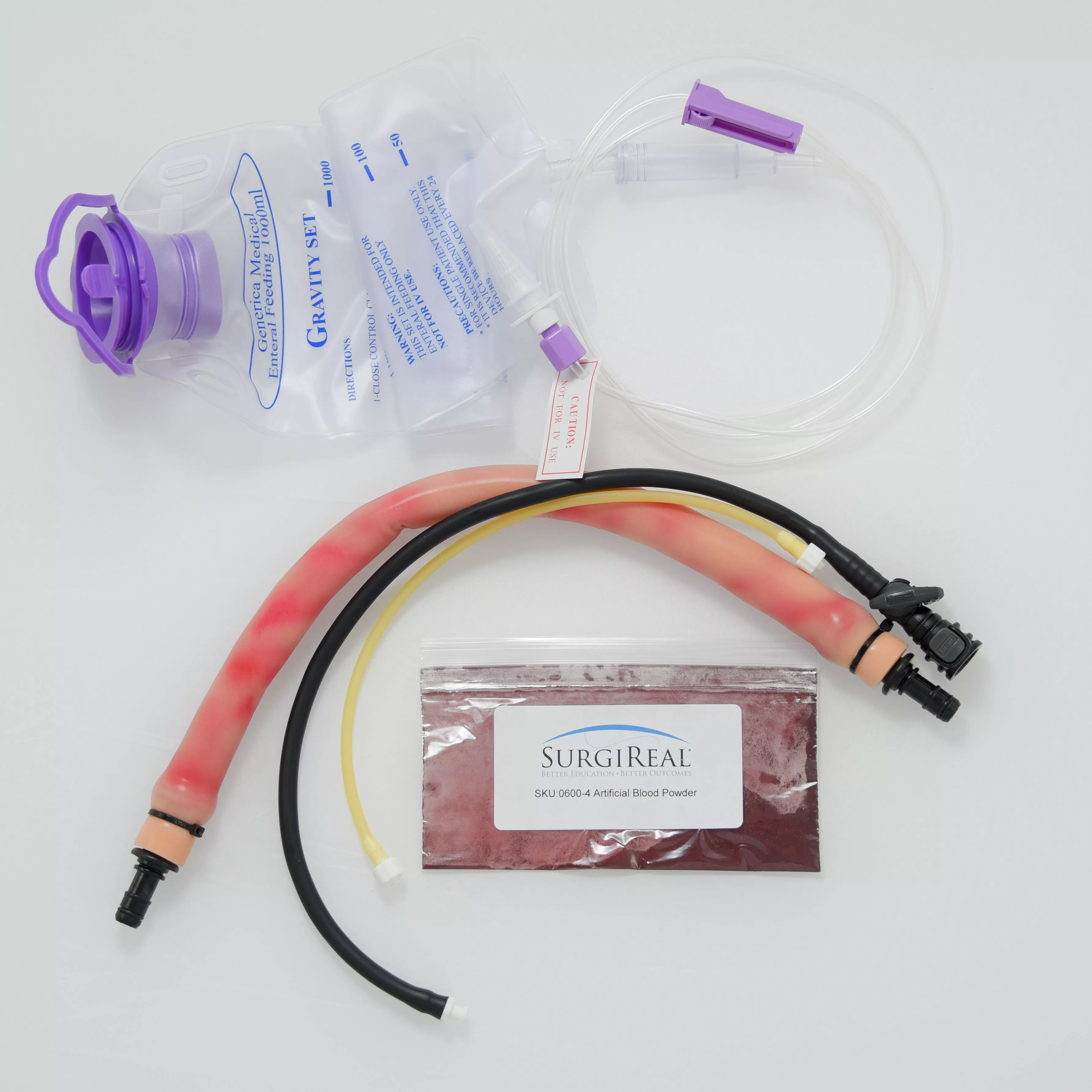
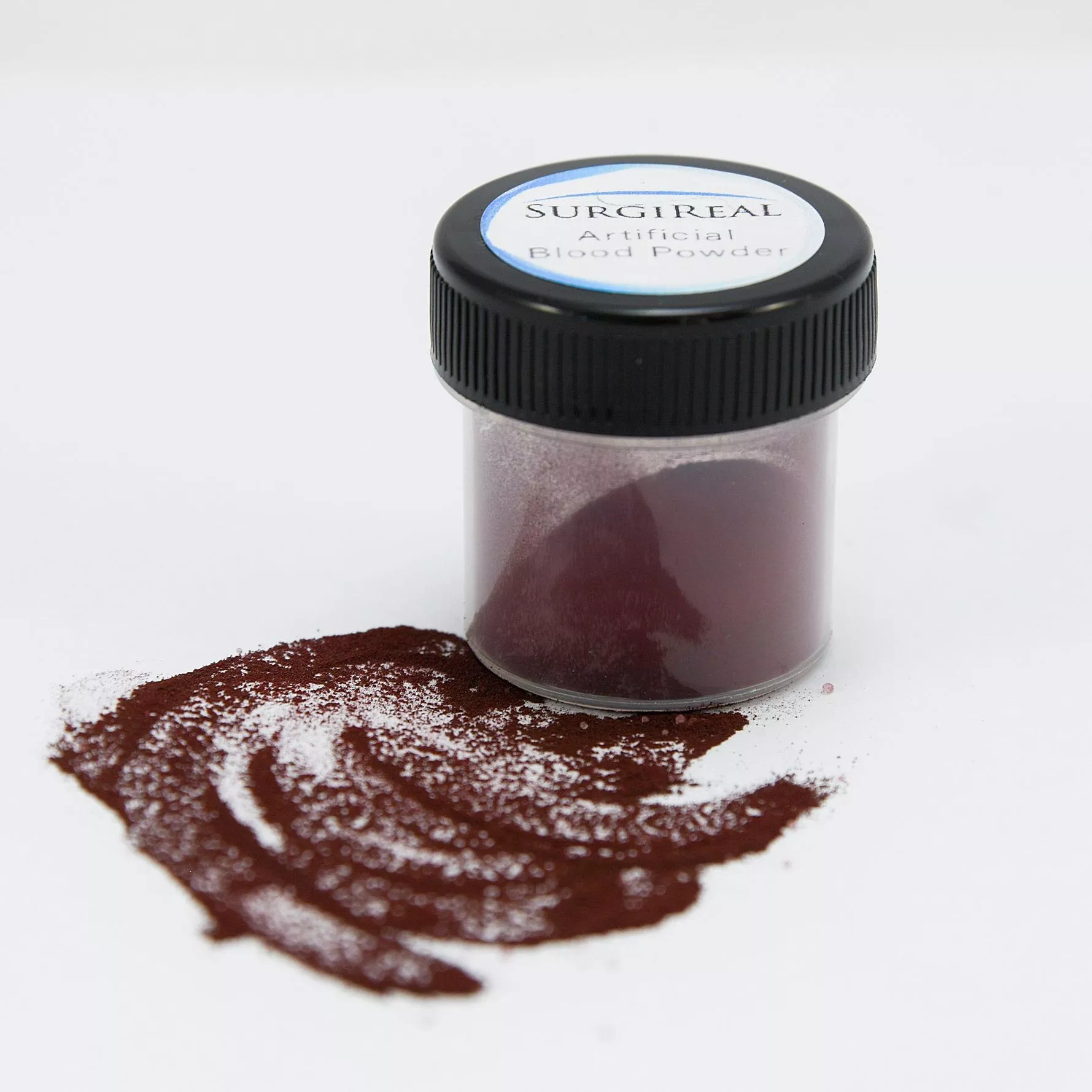
Simply mix SurgiReal's Artifical Blood Powder with water, add the mixture to an IV Bag, and start using your favorite SurgiReal RealFlow product! You could make one liter fake Blood with this Powder
Derived from CT and MR co-registered data, anatomically accurate and lifesize. 3D printed in full color, each anatomical component is individually colored. Hoof capsule is available separately and anchors the distal limb in the stance position. The series consists of four models: starting from Model 1 showing the full anatomy of the foot and comprised of 25 anatomical structures to step-by-step reduced models showing deeper structures.Model 4:This model, stripped of tendons and the suspensory ligament, shows the bones of the foot and their deep supporting ligaments.
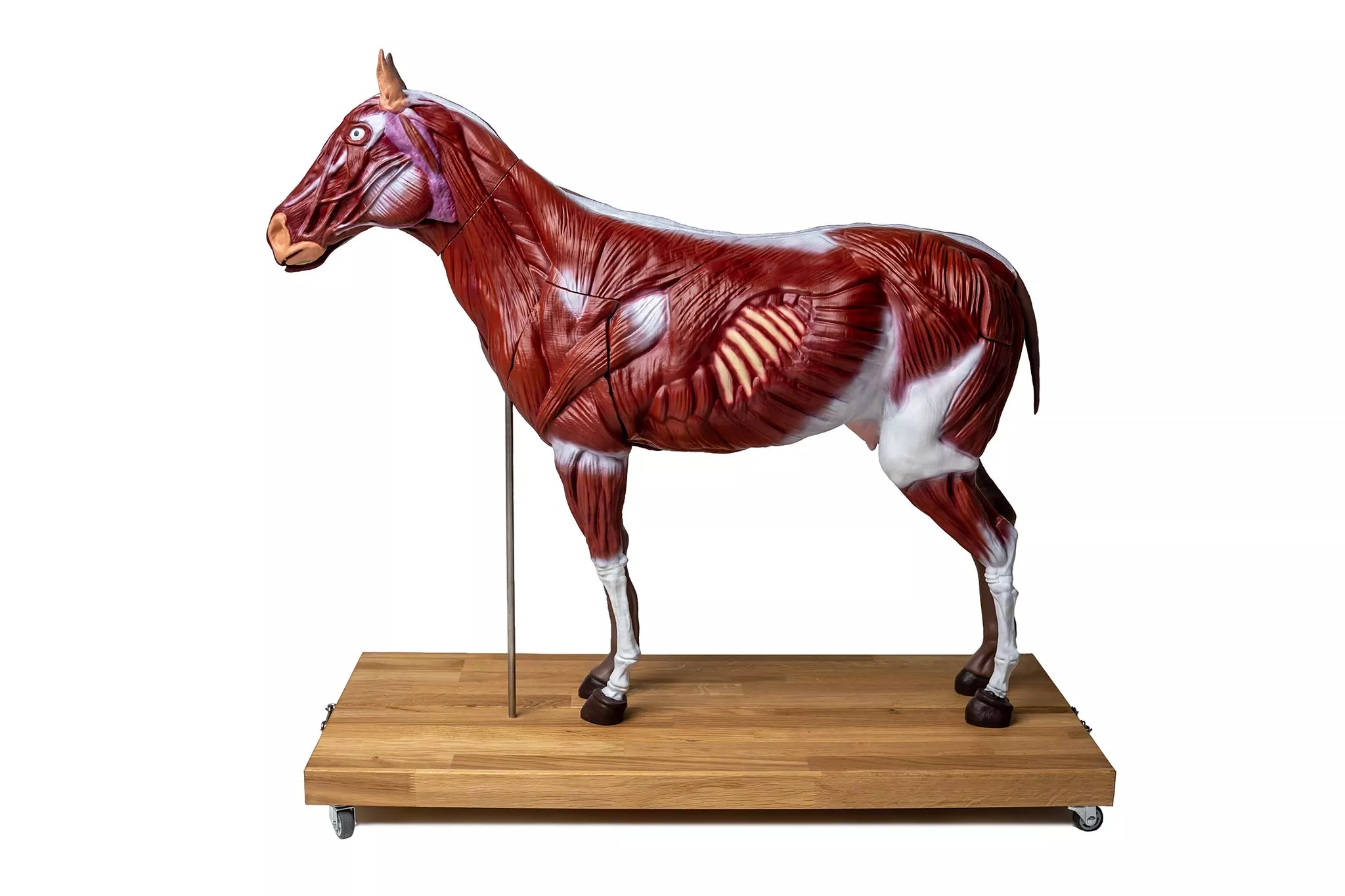
A model of a horse (mare), 1/3 natural size. Intended for teaching purposes, for pupils and students. The model is installed on a base with wheels, and can be divided in two parts along its sagittal plane. The right part shows the outer skin of the animal, and the left part presents body and limb muscles. When two halves are separated, the left side shows the chest and the abdominal cavity with detachable organs, and the right side of the model shows main blood vessels, the heart, the abdominal cavity wall with detachable organs. A half of the model’s head can also be detached from the half showing muscles. The model can be divided into 16 parts.- Right side of the head (outside)- Left side of the head (muscles)- Right side of the trunk (outside)- Left side of the trunk (muscles)- Left front leg- Right gluteal muscle- Heart (2 parts)- Left lung- Stomach (2 parts)- Small intestine- Large intestine- Liver- Left kidney- Spleen
This horse half-head shows a superficial dissection on the right lateral aspect and a middle sagittal section on the medial aspect.On the lateral side the skin has been removed, except on the nostrils, lips and external ear. In the rostral part of the dissection are the muscles of facial mimicry, the levator nasolabialis, canine, levator labii superioris, zygomaticus, buccinator (buccal portion) and depressor labii inferioris muscles. The caudal part of the dissection is occupied by the masseteric muscle covered by the masseteric fascia from the facial crest of the maxillary bone. This muscle presents on the surface the course of the dorsal and ventral buccal branches of the facial nerve, which end rostrally as buccolabial branches. In the notch of the facial vessels, the facial artery and vein are located together with the parotid duct. In the dorsal and caudal part of the masseter muscle, the transverse facial artery and vein are located together with the auriculotemporal nerve. The parotid-auricular muscle, the parotid gland, and the maxillary and linguofacial veins are located in the cervicofacial transit.In the middle sagittal section, the nasal cavity is occupied by the ventral nasal concha, dorsal nasal concha, and middle nasal concha, separated by the dorsal, middle, and ventral nasal meatuses. The perpendicular lamina of the ethmoid bone is located in the caudal area of the nasal cavity. This bone is the rostral limit of the cerebral fossa. The cerebellar fossa is caudal to the anterior one. The vomer bone establishes the choanae as transit to the nasopharynx where the pharyngeal opening of the auditory tube is located. The oral cavity is limited dorsally by the hard palate, which continues caudally as the soft palate. The sagittal section of the tongue shows the proper lingual muscle as well as the genioglossus and genihyoid muscles. The oropharynx is occupied by the root of the tongue and the soft palate. The epiglottis, arytenoid cartilage, and cricoid cartilage limit the laryngeal cavity with the lateral ventricle, vocal fold, and infraglottic cavity. The laryngopharynx is occupied by the esophageal vestibule. The esophagus is located dorsal to the trachea and ventral to the long cervical and long capitis muscles. The mandibular lymph nodes are in the intermandibular space.
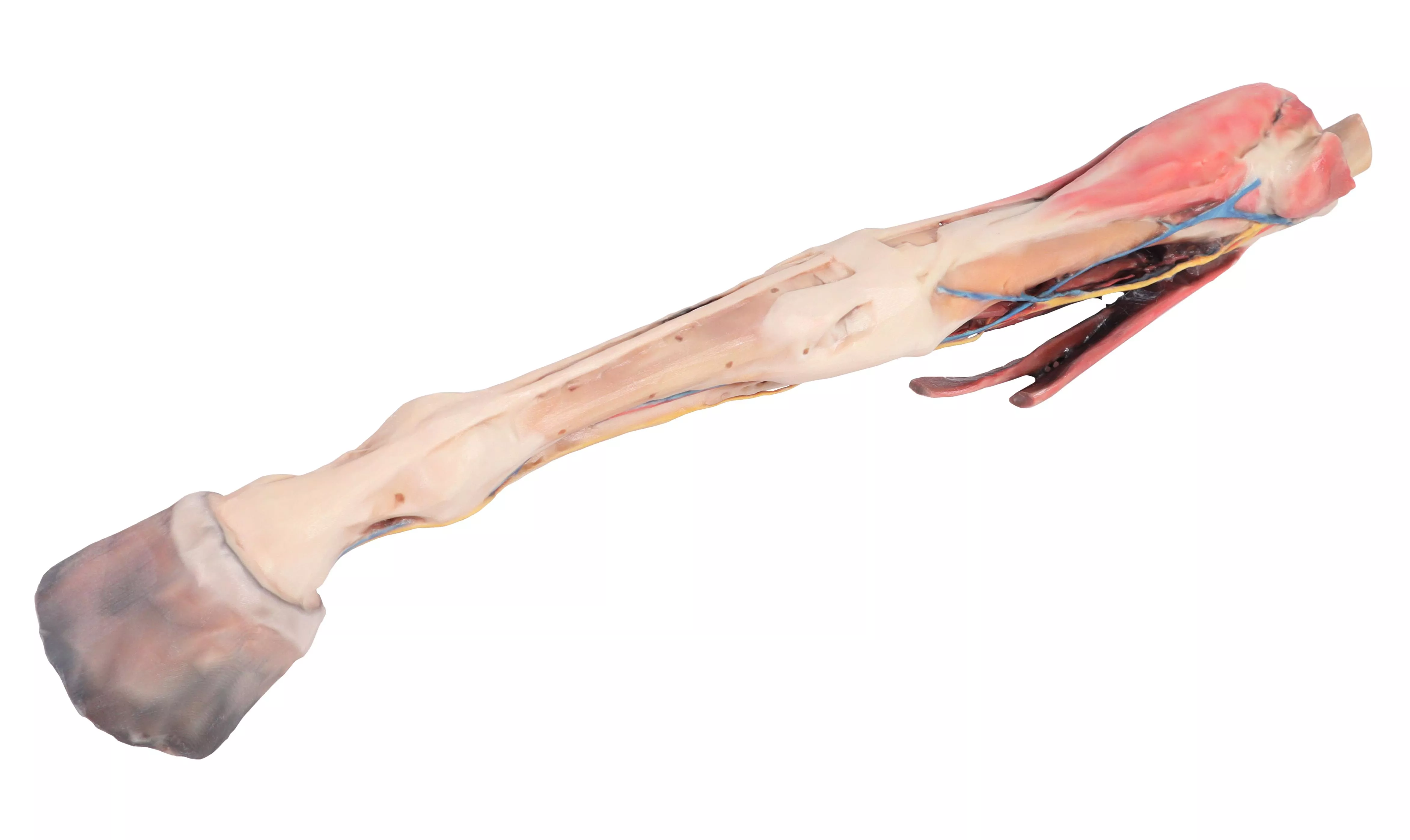
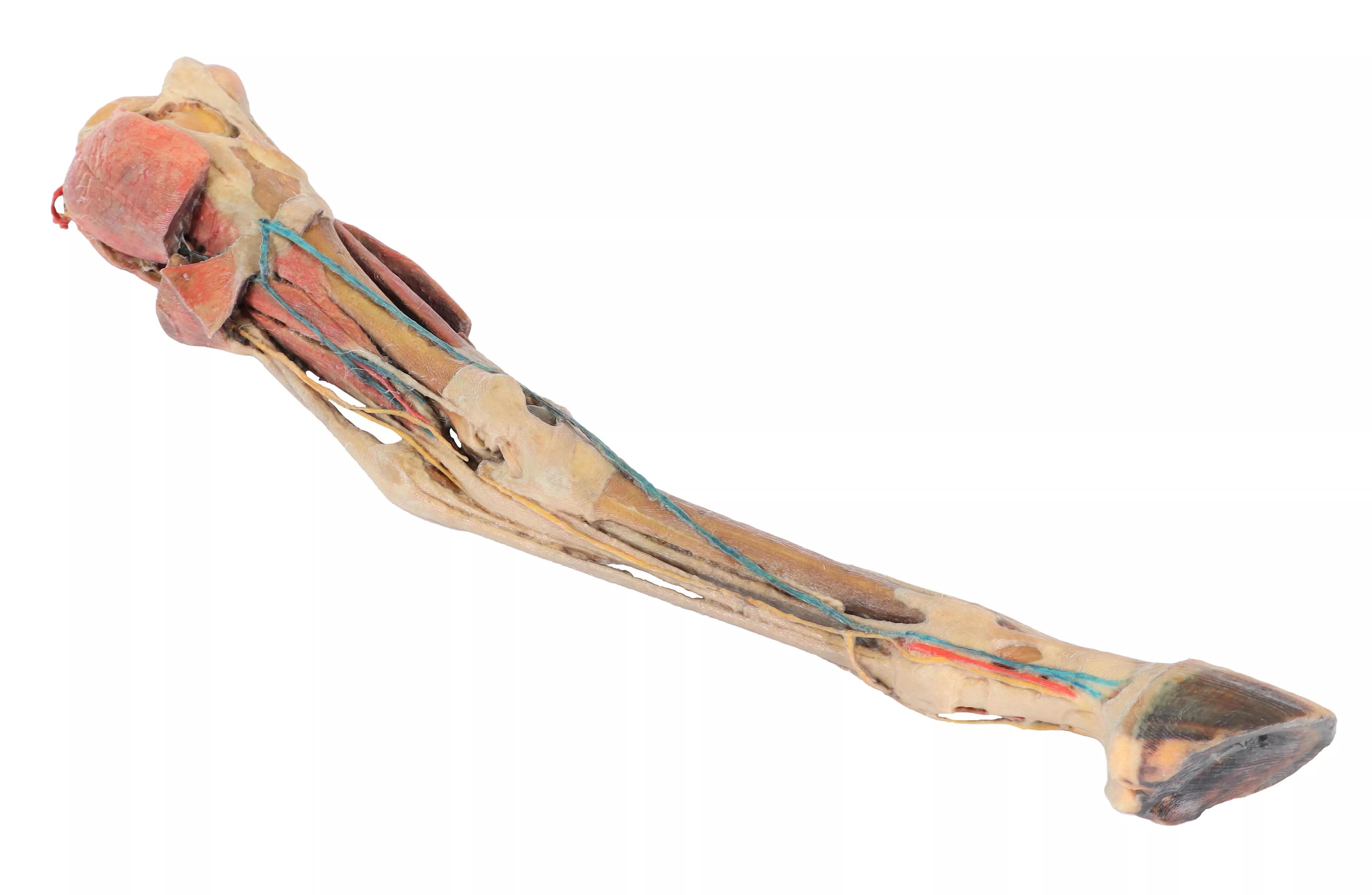
This specimen demonstrates the superficial anatomy of a right forelimb from the elbow joint to the hoof. The carpus and digital extensor and flexor muscles are located in the forearm related to the pathway of the median and cubital nerves. The main branches of the median artery as well as the median and cephalic veins have been maintained. Distal to the carpus the specimen shows the topographic relation of the palmar nerves with the digital tendon flexors. Distal to the metacarpophalangeal joint it is possible to see at both sides the palmar digital neurovascular bundle.
This specimen demonstrates the ligaments of the stifle joint with the leg in extension. In the anterior view, with the patella and the three patellar ligaments.The medial and lateral menisci, the caudal cruciate, the femoropatellar and the collateral ligaments are visible.
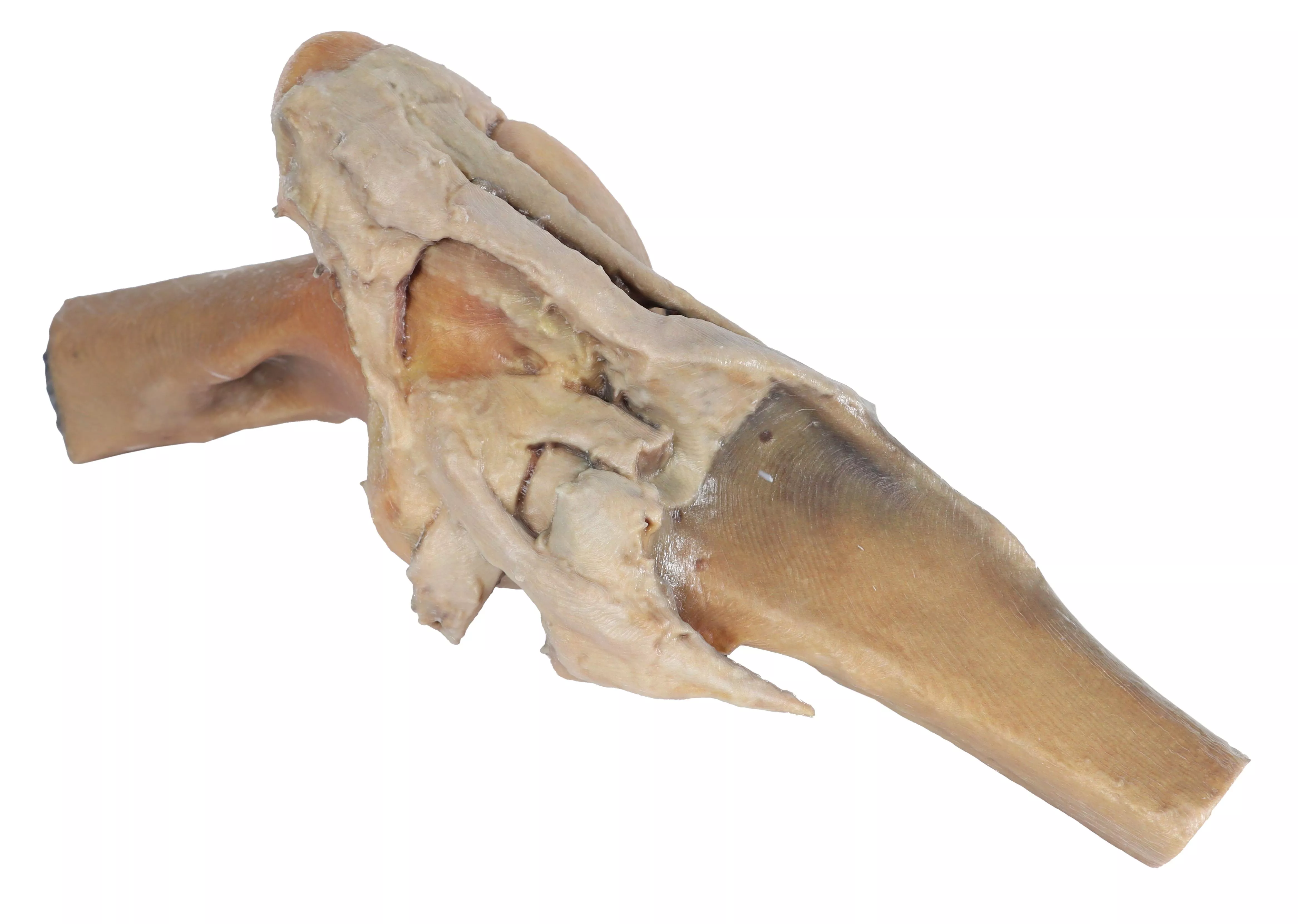
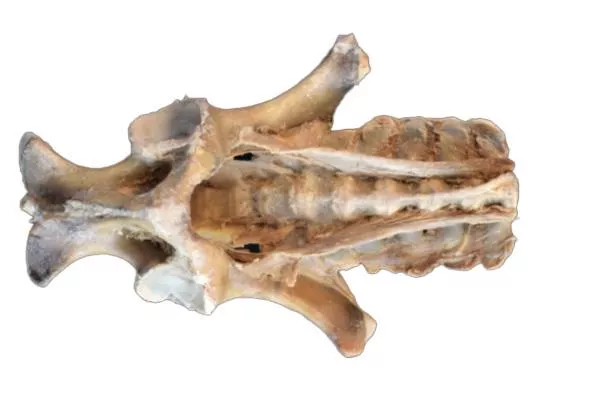
This specimen is focused on the sacroiliac joint, the two coxal bones (os coxae) are exposed in the dissection: Ilium, pubis and ischium, together with lumbar vertebrae and sacrum. At the sacroiliac joint, the dorsal sacroiliac ligament can be identified. The broad sacrotuberous ligament of the pelvis extends from the lateral sacral crest to the sciaticspine and ischial tuberosity. The greater sciatic foramen occupied by the lumbosacral trunk. From the vertebral bodies and part of the transverse processes of the lumbarvertebrae, the tendons of insertion of the psoas minor muscles are identified. The ventral longitudinal ligament connects the ventral aspect of most cranial lumbar vertebral bodies.
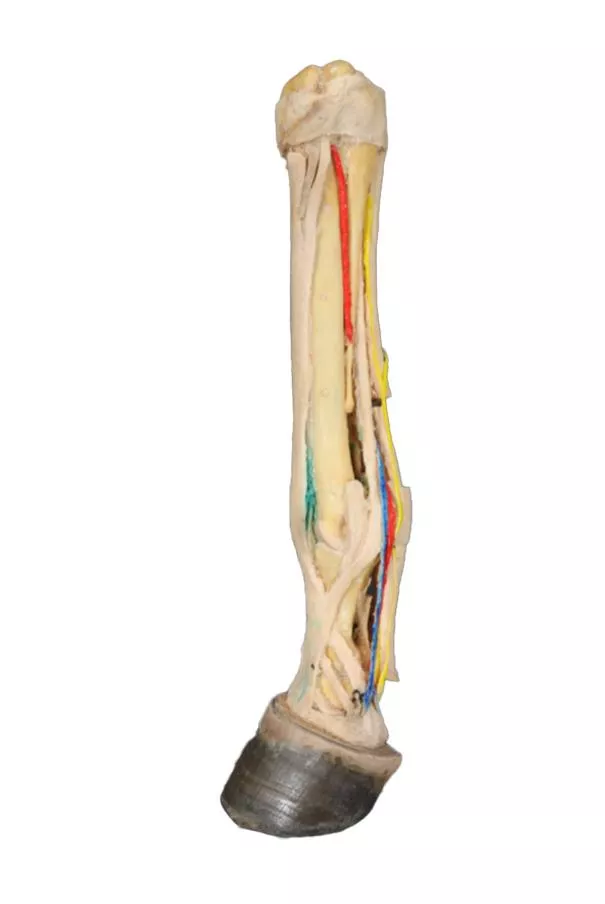
This dissected right-foot specimen displays a mixture of the vascular, nervous, ligaments and tendons. The plantar digital neurovascular bundles both sides of the flexor tendons. The two digital extensor tendons are identified in the proximal dorsal aspect of the specimen. Metatarsophalangeal and proximal interphalangeal joints show all ligaments. Between the plantar aspect of the metatarsal bones and the digital tendon flexors is the interosseus ligament with its sesamoid and extensor branches.
This dissected left-foot specimen displays the plantar digital neurovascular bundle both sides of the flexor tendons. The two digital extensor tendons are identified in the dorsal aspect of the specimen. The plantar aspect of the metacarpophalangeal and proximal interphalangeal joints show a dissection of the deep ligaments and their relationship with the neurovascular bundle.
This specimen preserves a superficial dissection of the lower limb musculature from the midthigh to the hoof. The capsule of the stifle and tarsus joints has been opened to demonstrate the menisci, the main ligaments and the topography of the tendons. Muscles extensor and flexor of these joints as well as the foot joints have been dissected from the origin in the femur and tibia bones, to the insertions tendons in the tarsus, metatarsus and phalanges bones. Nerves and vessels have been dissected in the popliteal fossa, tarsus and digit regions. Detailed anatomical description on request.
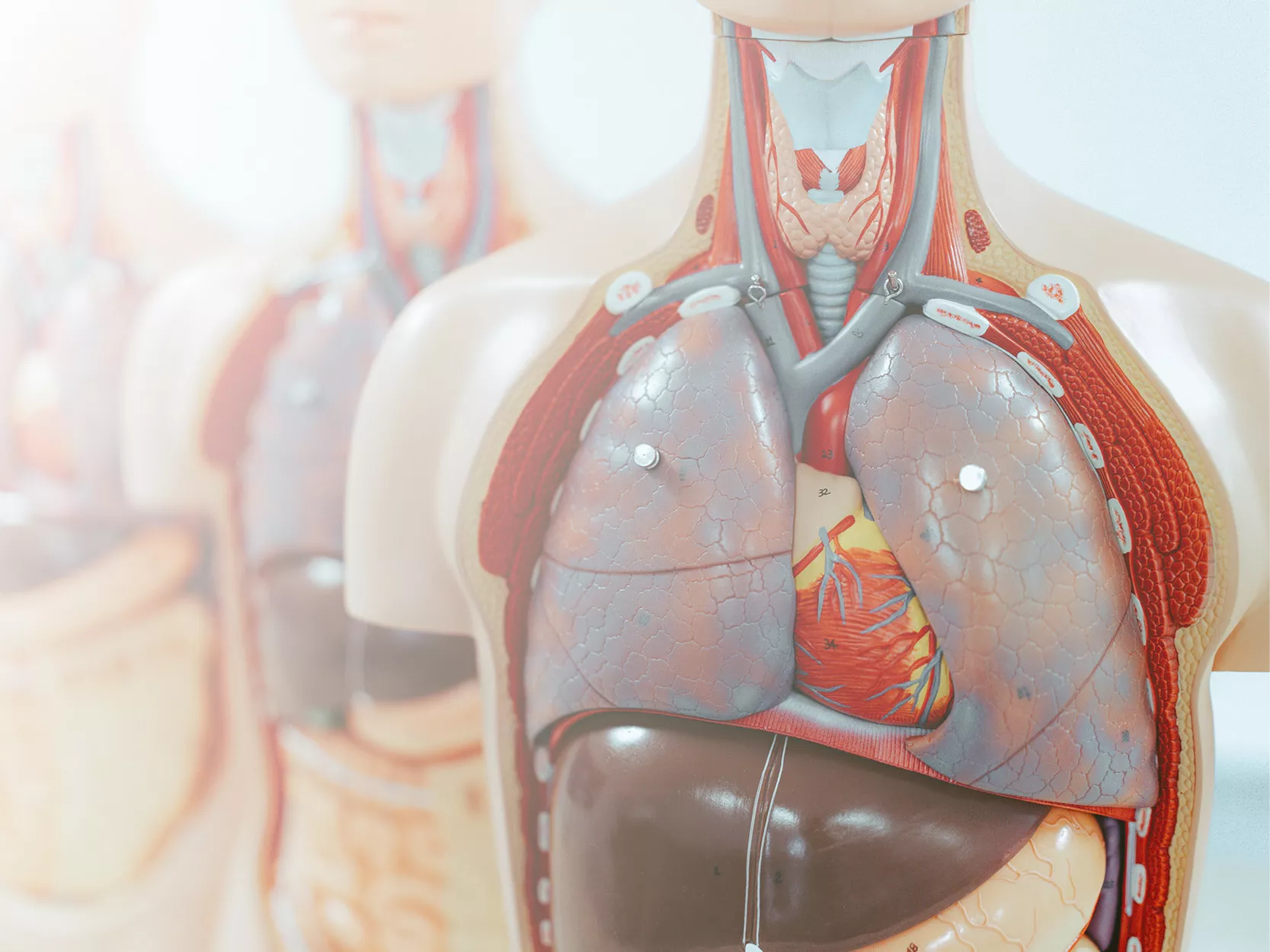
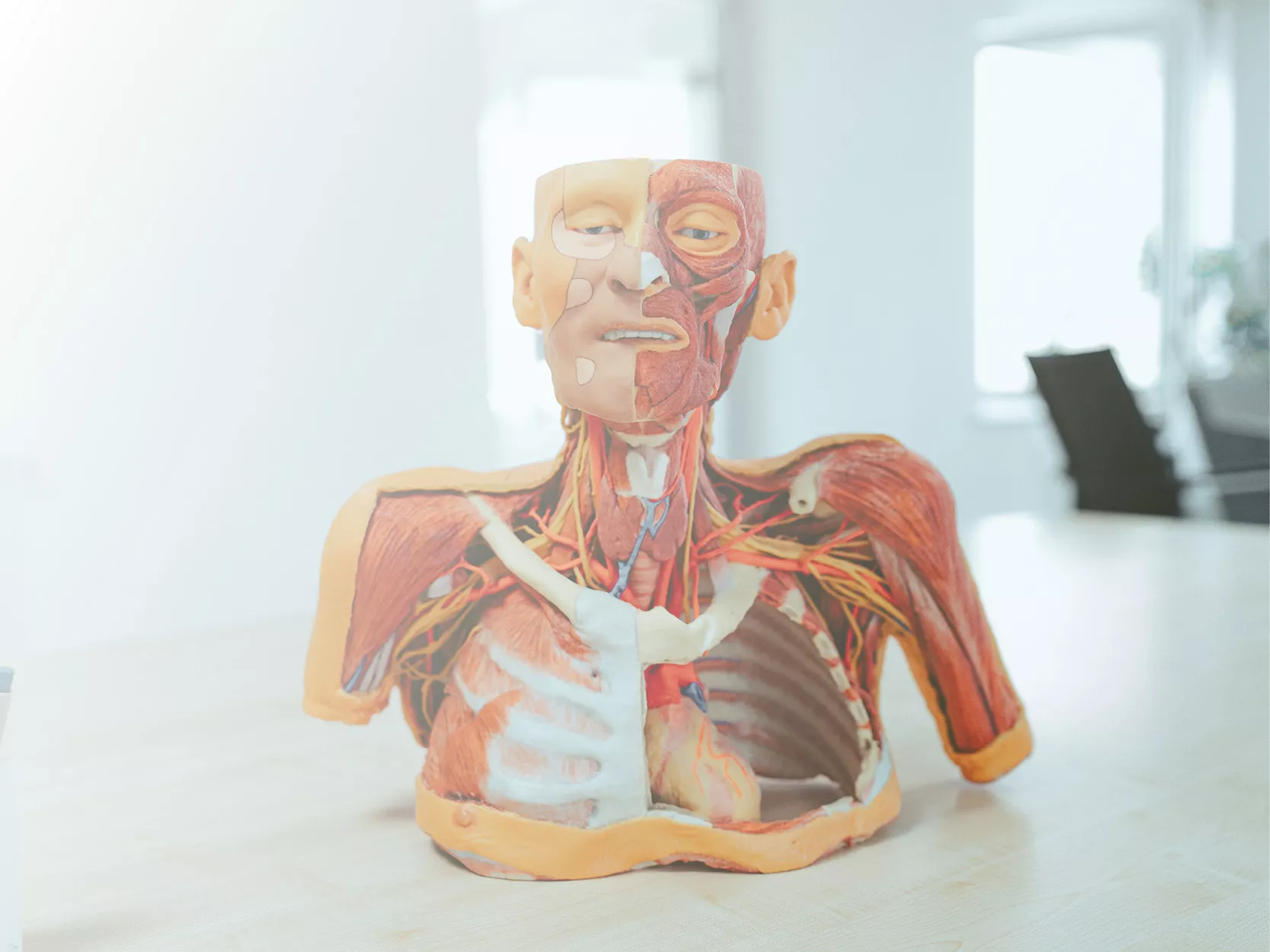
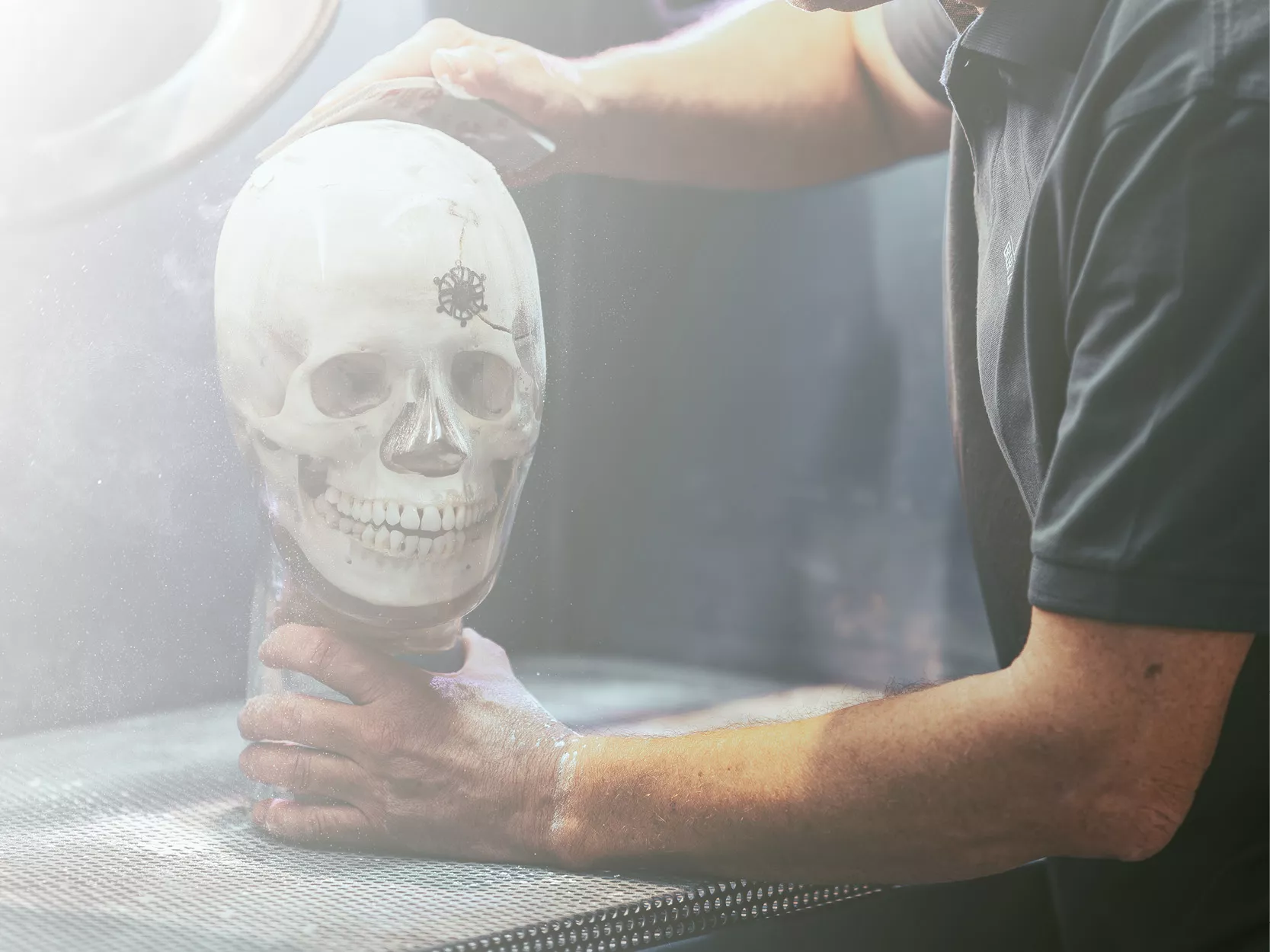
Un nouveau niveau de réalisme avec nos modèles de formation vétérinaire !
La formation des futurs vétérinaires et thérapeutes atteint un nouveau niveau de réalisme grâce à nos modèles de formation vétérinaire et à nos simulateurs. Nos modèles anatomiques sophistiqués offrent une expérience de formation pratique qui prépare parfaitement les futurs vétérinaires et thérapeutes aux défis de la médecine vétérinaire.
Les simulateurs médicaux permettent un entraînement intensif dans différentes disciplines vétérinaires, allant des procédures de diagnostic aux interventions chirurgicales. Grâce à la reproduction réaliste des structures anatomiques et des processus physiologiques, les étudiants peuvent développer leurs compétences au plus haut niveau. Nos modèles de formation vétérinaire - et nos simulateurs offrent non seulement une expérience pratique proche de la réalité, mais aussi la possibilité de simuler des scénarios médicaux complexes. Les futurs vétérinaires peuvent améliorer leurs compétences diagnostiques et thérapeutiques sans être exposés à de vrais animaux.
Investissez dans l'avenir de la santé animale en misant sur nos modèles de formation vétérinaire et nos simulateurs. Nous proposons des technologies de pointe et des matériaux de haute qualité pour créer un environnement de formation pratique qui prépare au mieux les futurs vétérinaires à assumer leurs responsabilités. Faites confiance à notre expérience et à notre expertise pour garantir une excellente qualité de formation en médecine vétérinaire.