











“Charlie Chest” Chest Decompression Trainer
Question regarding article:€332.01*
Article in production, available in about 2-3 weeks
Product number:
7920
Item number: 7920

Product information "“Charlie Chest” Chest Decompression Trainer"
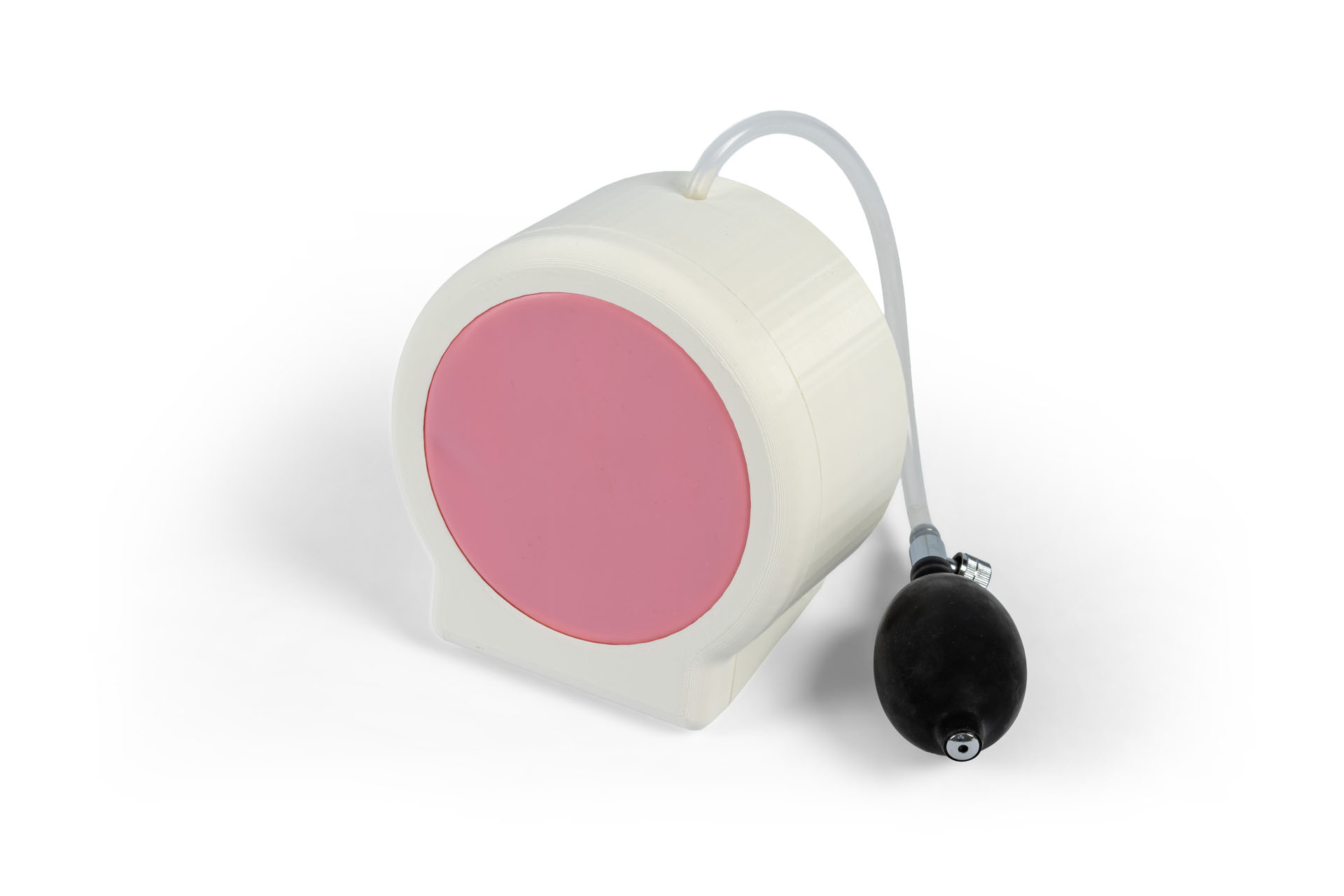
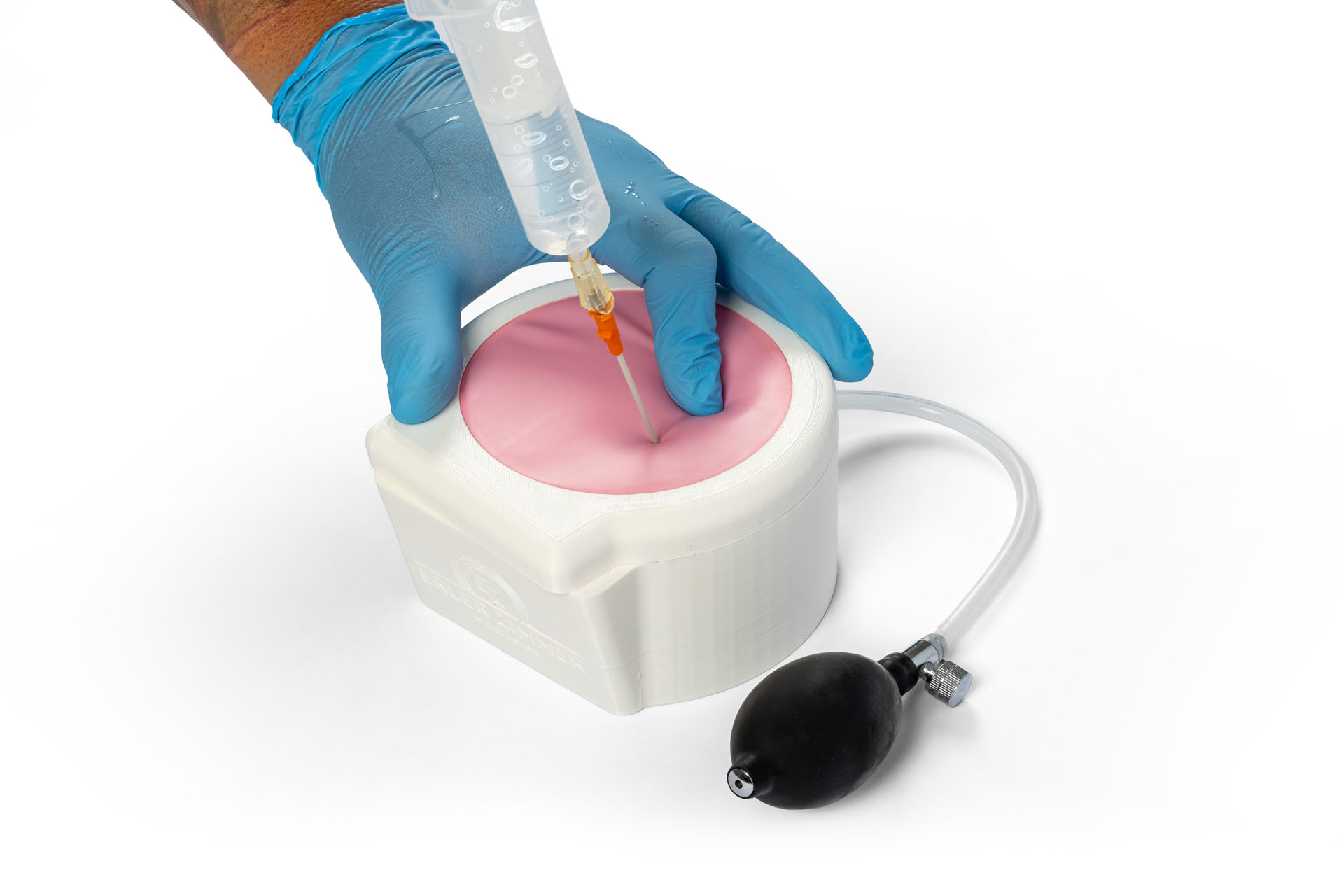
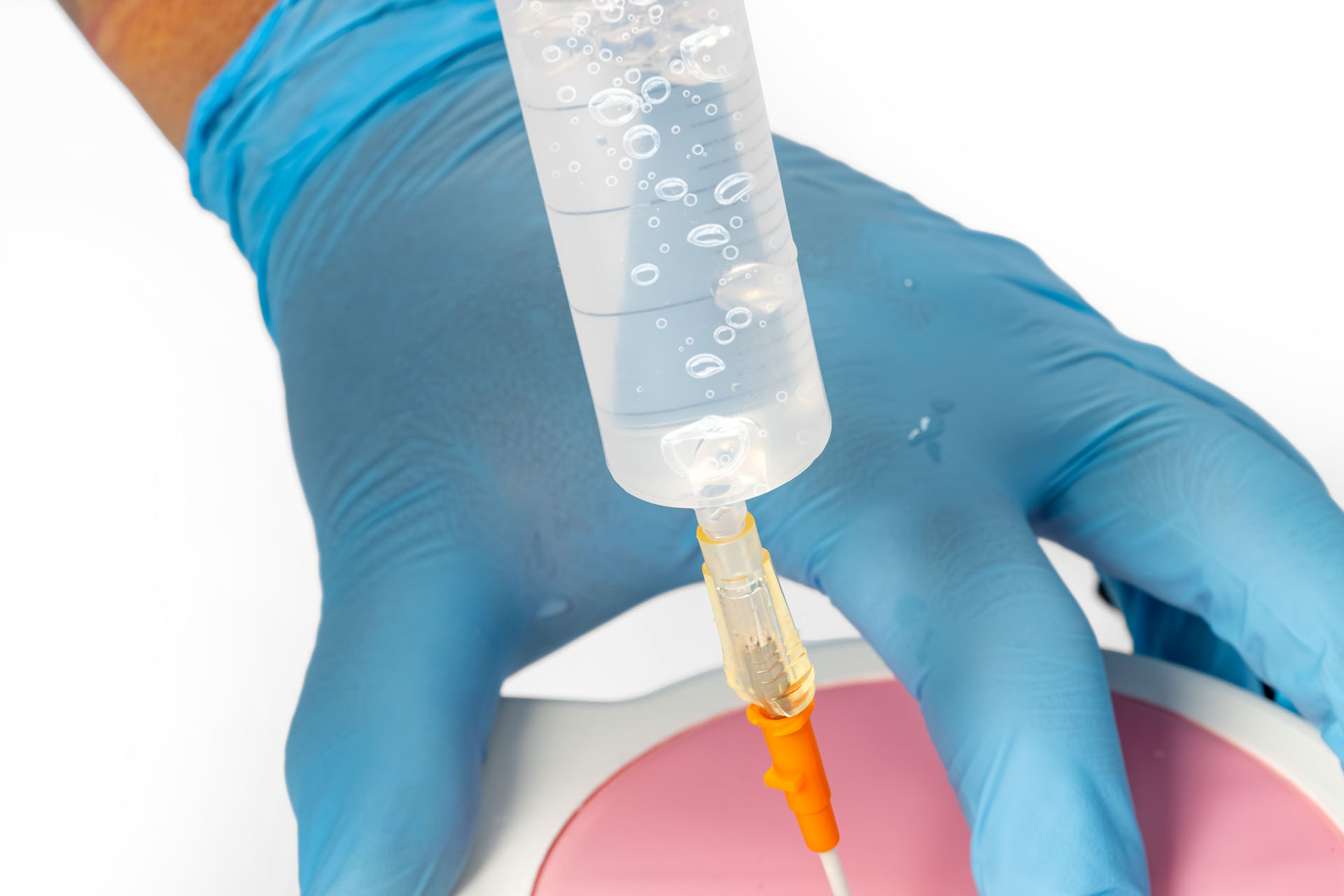
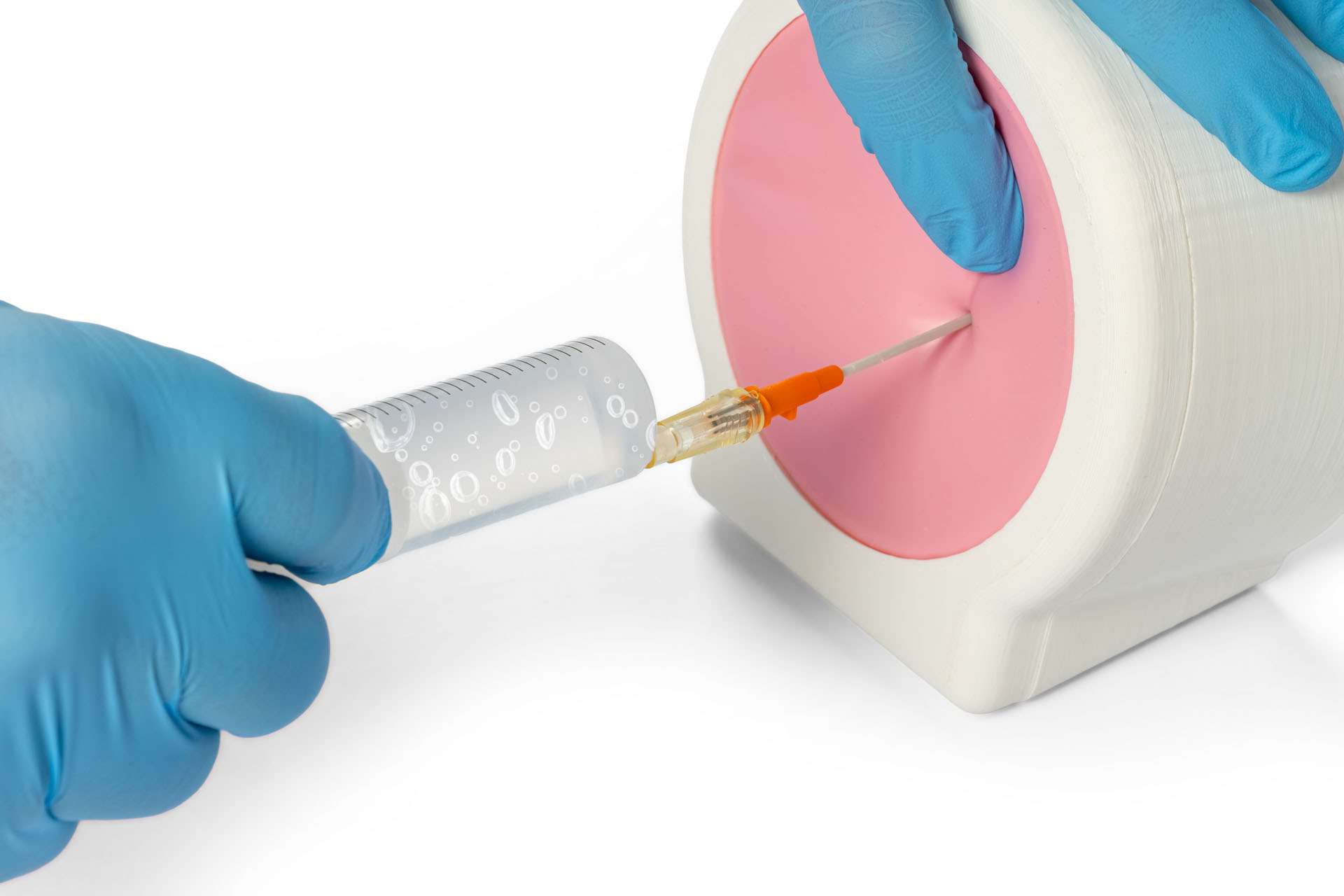
The Charlie Chest Thoracic Decompression Trainer has been specifically developed to provide realistic training for emergency and acute care medicine. Whether used in EMS education, simulation training, or clinical skills instruction, the trainer enables learners to safely practice and repeatedly perform thoracic decompression procedures under highly realistic conditions.
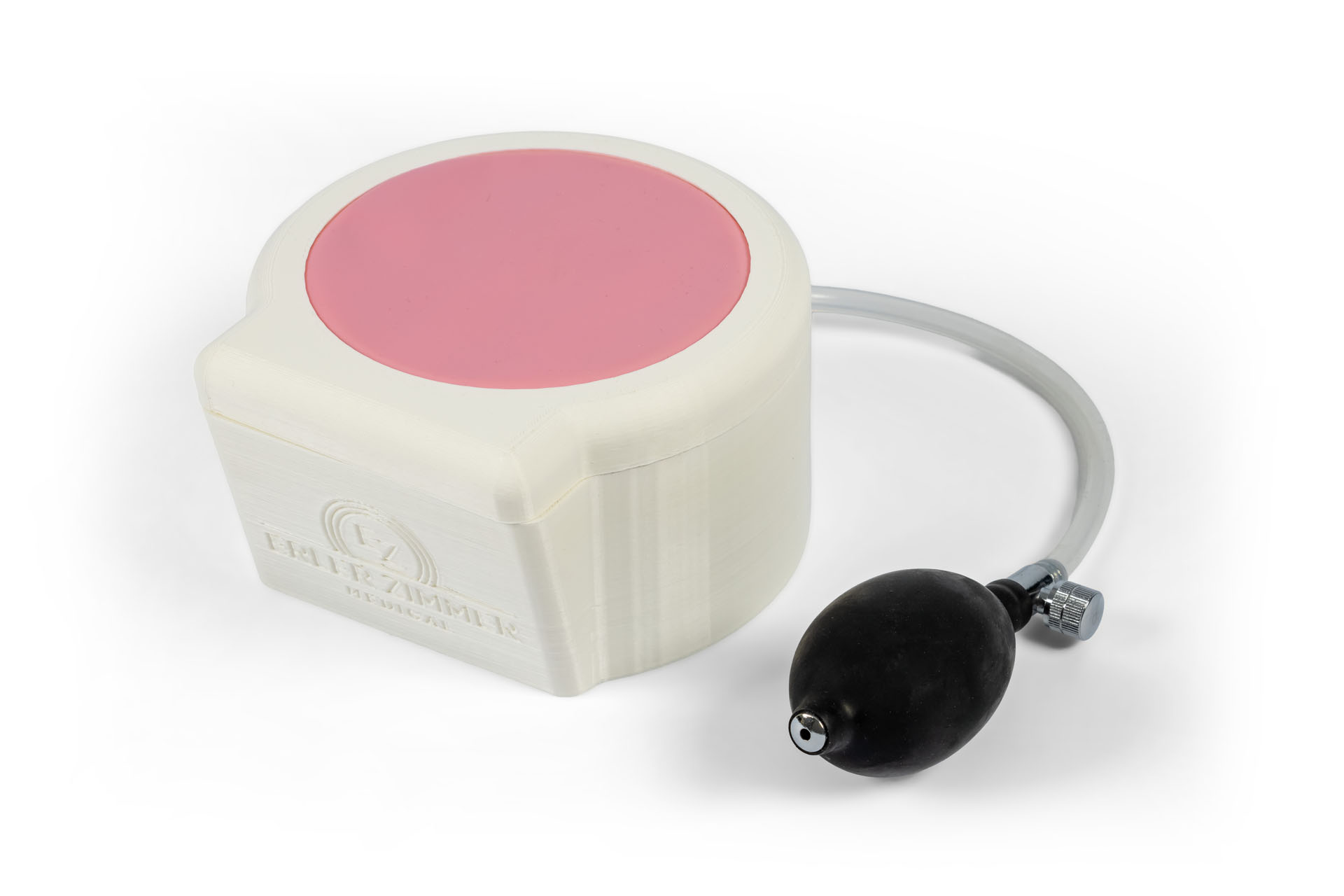
Thanks to its well-designed housing, the trainer can be used in two different positions: lying flat to simulate a Monaldi approach or standing on its side to simulate a Bülau approach. This allows both established access techniques to be practiced realistically using a single training system.
Inside the trainer, simulated ribs, a replaceable soft tissue and skin insert, and a replaceable balloon that simulates the pleural cavity provide an authentic puncture experience. When the procedure is performed correctly, air escapes with both audible and tactile feedback, giving trainees immediate confirmation of successful decompression and reinforcing the learning experience.
Special attention was given to cost-effectiveness during the development process. All consumable components can be replaced quickly and inexpensively without compromising realism. The pleural balloon is easily inflated using a hand pump and can be replaced within seconds, allowing the trainer to be immediately prepared for the next training session.
Key Features
• Realistic thoracic decompression training
• Suitable for both Monaldi and Bülau approaches
• Flexible positioning of the trainer (horizontal or side-mounted)
• Simulated ribs for accurate anatomical orientation
• Replaceable skin and soft tissue insert
• Balloon simulates the pleural cavity with audible air release upon successful decompression
• Quick replacement of the pleural balloon
• Easy inflation using a hand pump
• Low-cost consumable components
• Ideal for EMS education, hospitals, simulation centers, and medical training programs
Technical Features
• Compact and durable housing
• Reusable trainer with replaceable wear components
• Designed for repeated training cycles
• Engineered to combine high realism with low operating costs
The Charlie Chest combines realistic tactile feedback, functional design, and low ongoing operating costs in a modern training system for safe and effective thoracic decompression education. It is ideally suited for training centers, EMS academies, hospitals, and simulation facilities seeking a high-quality and cost-efficient training solution.
Thanks to its well-designed housing, the trainer can be used in two different positions: lying flat to simulate a Monaldi approach or standing on its side to simulate a Bülau approach. This allows both established access techniques to be practiced realistically using a single training system.
Inside the trainer, simulated ribs, a replaceable soft tissue and skin insert, and a replaceable balloon that simulates the pleural cavity provide an authentic puncture experience. When the procedure is performed correctly, air escapes with both audible and tactile feedback, giving trainees immediate confirmation of successful decompression and reinforcing the learning experience.
Special attention was given to cost-effectiveness during the development process. All consumable components can be replaced quickly and inexpensively without compromising realism. The pleural balloon is easily inflated using a hand pump and can be replaced within seconds, allowing the trainer to be immediately prepared for the next training session.
Key Features
• Realistic thoracic decompression training
• Suitable for both Monaldi and Bülau approaches
• Flexible positioning of the trainer (horizontal or side-mounted)
• Simulated ribs for accurate anatomical orientation
• Replaceable skin and soft tissue insert
• Balloon simulates the pleural cavity with audible air release upon successful decompression
• Quick replacement of the pleural balloon
• Easy inflation using a hand pump
• Low-cost consumable components
• Ideal for EMS education, hospitals, simulation centers, and medical training programs
Technical Features
• Compact and durable housing
• Reusable trainer with replaceable wear components
• Designed for repeated training cycles
• Engineered to combine high realism with low operating costs
The Charlie Chest combines realistic tactile feedback, functional design, and low ongoing operating costs in a modern training system for safe and effective thoracic decompression education. It is ideally suited for training centers, EMS academies, hospitals, and simulation facilities seeking a high-quality and cost-efficient training solution.
Login
Erler-Zimmer
Erler-Zimmer Medical GmbH
Hauptstrasse 27
77886 Lauf
Germany
info@erler-zimmer.de
Achtung! Medizinisches Ausbildungsmaterial, kein Spielzeug. Nicht geeignet für Personen unter 14 Jahren.
Attention! Medical training material, not a toy. Not suitable for persons under 14 years of age.
Other customers also bought

Combat Carl - Care and Evacuation manikin
Combat Carl was developed in close cooperation with the German Armed Forces and special units and offers all the important functions for TCCC and TECC training. Due to its robust nature and flexibility in the extremities, Combat Carl is ideal for professional training in the civilian and military sector.Providing medical care on the battlefield poses different challenges than in the event of an accident at home. From initial treatment in a firefight to onward transportation to a treatment facility, soldiers risk their lives and Combat Carl can be used to map the complete MARCH scheme.M - Treatment of massive bleeding A - Airway R - Respiration C - Circulation H - Hypothermia / Head Injuries Although the military-tactical procedure may vary depending on the different threats in the combat situation, the basic philosophy of casualty care always remains the same. Combat Carl can optionally be equipped with amputation stumps or realistic wound moulages.During the first phase, “Care Under Fire”, the aim is to guide a wounded person to self-help as quickly as possible, despite the possibility of ongoing hostilities, in order to bring them to a safe area away from the fighting and treat them. Almost 18 percent of fatalities can be avoided if specially trained first aiders provide care within the first ten minutes, the so-called Platinum Ten Minutes. For this reason, great importance is attached to self-help and helping others. This enables them to provide first aid under tactical conditions. Simple haemostatic measures for gunshot wounds are carried out using self-adhesive and extremely realistic wound dressings and can be treated using a tourniquet, increasing the wounded person's chances of survival. Applying a tourniquet to the extremities prevents excessive blood loss and the resulting death from bleeding to death. Ideal for training with the bleeding module which can be controlled via an APP. In the second phase, “Tactical Field Care”, a standardized examination according to the MARCH scheme can now be carried out for the first time without enemy action. This scheme is repeated continuously. This is followed by the third and final phase, “Tactical Evacuation Care”. This comprises the preparation and implementation of qualified tactical casualty transportation to a field hospital or field hospital. Various means of transportation are available for this transport phase, depending on the operational situation. Ideally, this is the rescue helicopter equipped with intensive care equipment. Specially armored vehicles such as a transport tank serve as a means of rescue by land. The basic aim of TCCC - Tactical Combat Casualty Care is to adhere to operationally defined timelines. After basic first aid, the “Platinum Ten Minutes”, the wounded must be evacuated from the dangerous situation within the so-called “Golden Hour”. Further surgical treatment is then carried out in a sterile environment. Features: - Weight from approx. 65kg to 85kg - Realistic size 175cm - Robust PVC material - Ideal for outdoor use under extreme conditions (sand, rain, mud etc.) - Wound inserts incl. universal bleeding module in 7 places for changing - Flexible extremities for different carrying techniques - No sensitive electronics- Made in Germany - cABCDE scheme - Compliant - XABCDE scheme - Compliant - MARCH scheme - Compliant - Voice module via Bluetooth (waterproof up to 1 meter according to IPX7) - Interchangeable eyes, 3 pairs, normal, dilated, constricted - Airway protection, oropharyngeal and nasopharyngeal - Wound management 7 sites for wound modules - Stab wound, gunshot wound, bullet wound, blind cover - Wounds have a bleeding function for manual or automatic bleeding modules via app control - Tourniquet system - Dressing techniques / support and wound dressing - Intraosseous access tibia - Intraosseous access humerus - Intraosseous access sternum - Thoracic release according to Monaldi - Thoracic release according to Bülau - Intravenous injection - Peripheral venipuncture
Wendl/Guedel-Trainer "Airway Alex"
€332.01*
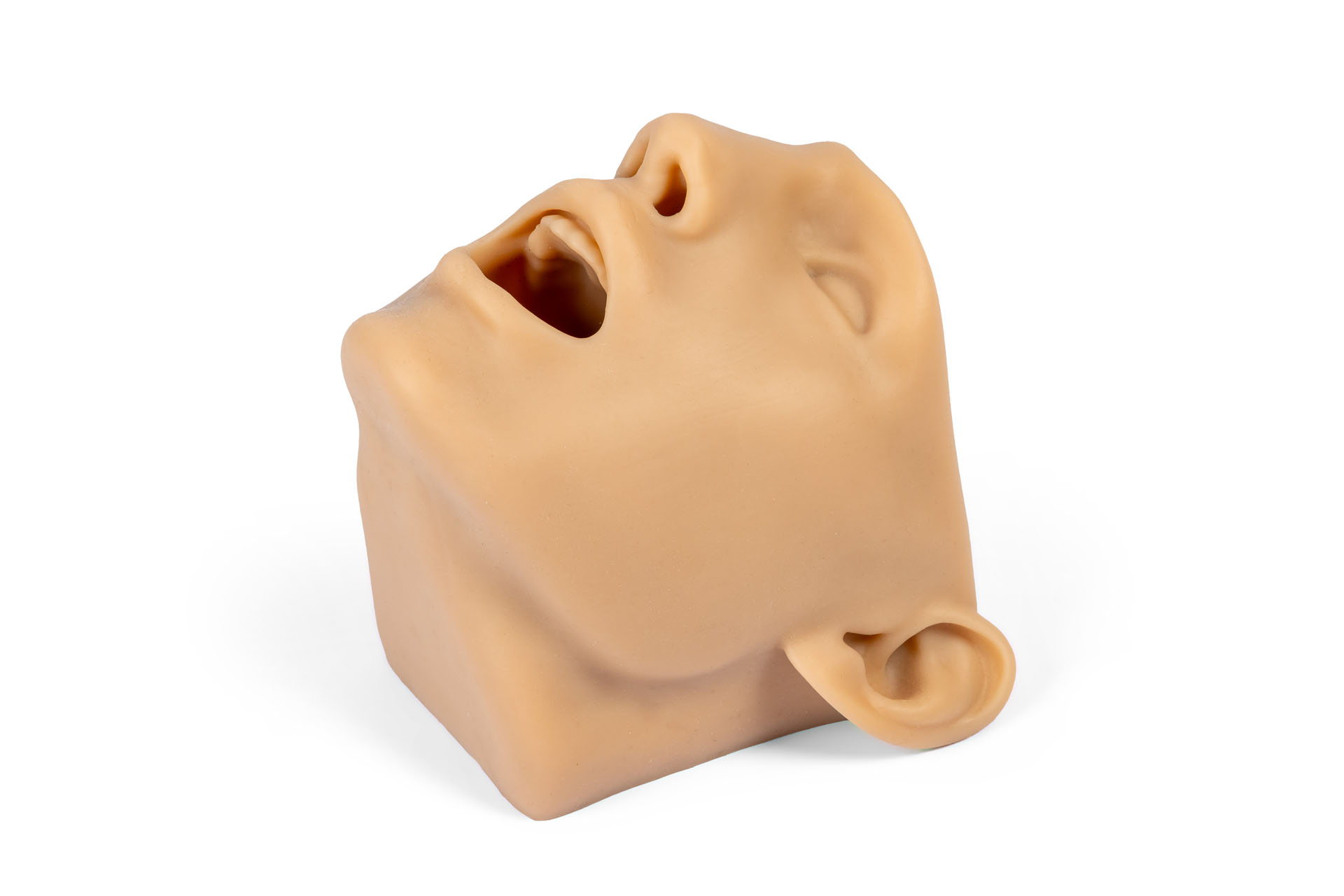
The “Airway Alex” Airway Trainer has been specifically designed for hands-on airway management training. This compact training model allows realistic practice in the insertion of nasopharyngeal and oropharyngeal airways and is ideal for the education and training of EMS professionals, tactical medicine, nurses, medical staff and first aid providers.The flexible face features anatomically designed nasal openings for the insertion of a nasopharyngeal airway (NPA). The trainer provides two different anatomical conditions: The left nostril has a normal opening, while the right nostril is narrower and simulates a deviated nasal septum. This allows users to practice different levels of difficulty when inserting a nasopharyngeal airway. The open mouth allows both visual confirmation of the NPA position and the insertion of an oropharyngeal airway (OPA). The realistically reproduced airway extends to the epiglottis and provides realistic tactile feedback during insertion. A soft, movable tongue further enhances the training experience and simulates patient anatomy. The model consists of the face including the left ear and can be used conveniently on a table or held in the hand. This makes the trainer suitable for both individual practice and use in professional training courses. The “Airway Alex” Airway Trainer combines realistic anatomy, easy handling and excellent value for money – a practical solution for effective and repeatable airway management training. Product Features • Realistic airway management trainer • Anatomically represented airway extending to the epiglottis • Different nasal anatomies for varying levels of difficulty • Narrower right nostril simulating a deviated nasal septum • Left nostril with normal opening • Flexible facial structure with soft, movable tongue • Nasal openings for nasopharyngeal airway (NPA) insertion • Open mouth for checking NPA placement and inserting an oropharyngeal airway (OPA) • Face including left ear • Suitable for tabletop or handheld training • Ideal for EMS, emergency medicine, nursing, medical education and simulation • Cost-effective training model with a high degree of realism Ideal for training: • Nasopharyngeal airway (NPA) insertion • Management of different anatomical conditions during nasopharyngeal airway insertion • Checking NPA placement • Oropharyngeal airway (OPA) insertion • Anatomical orientation of the upper airway • Basic airway management skills

Continuous innovation

Social responsibility

Active customer orientation

Understanding quality

Sustainable actions

ISO 9001 certification