













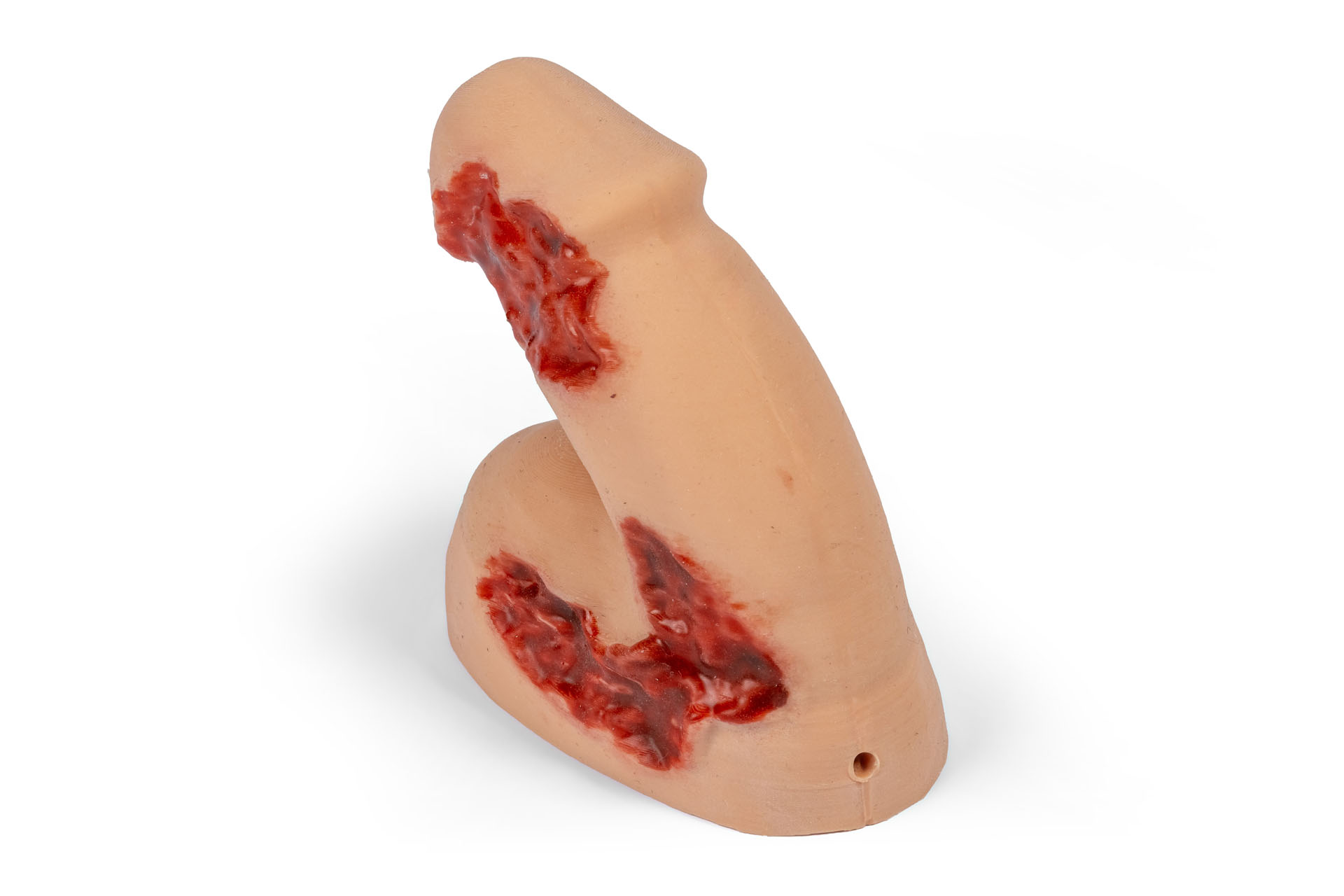
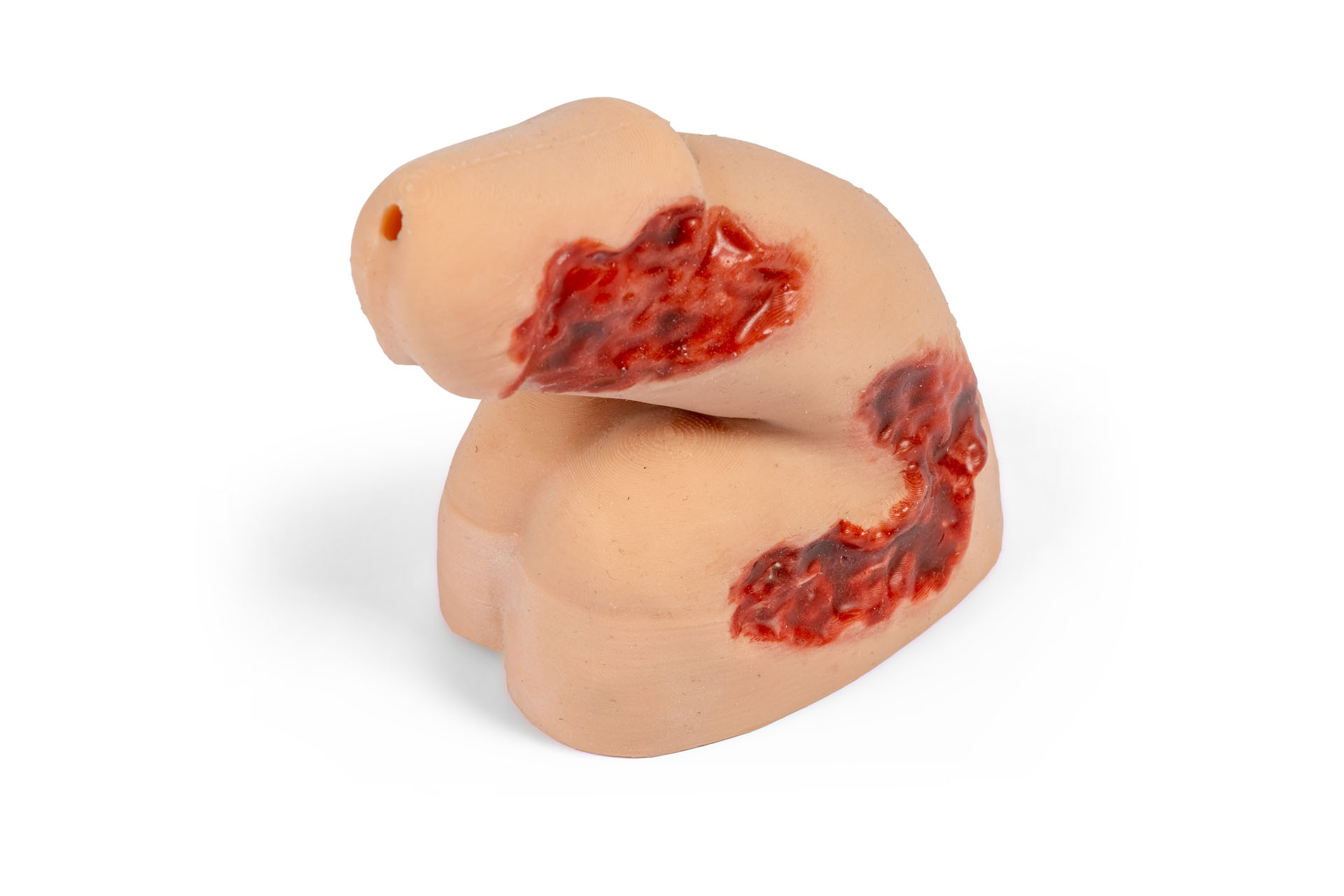
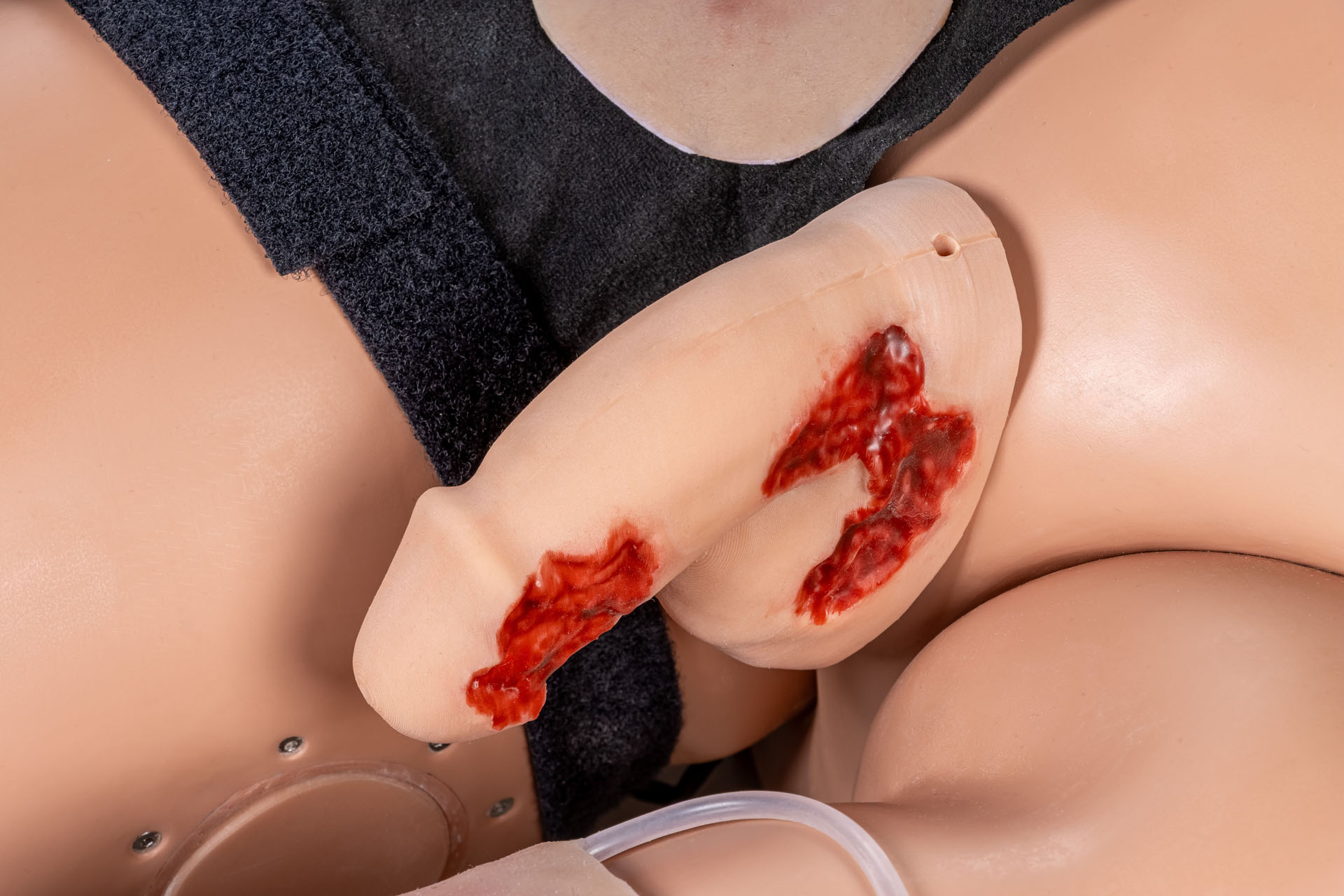
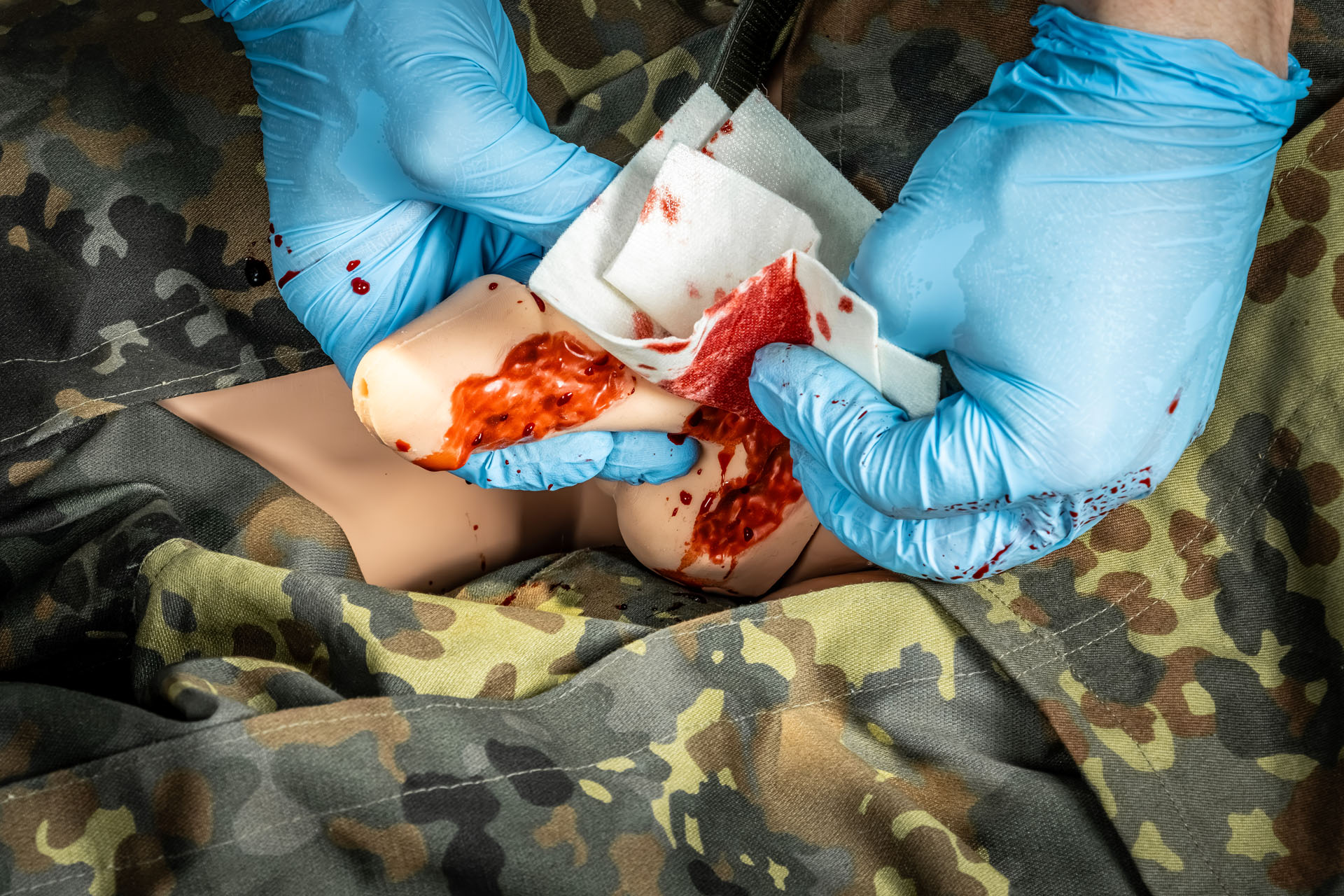

A key training objective is to consistently overcome the sense of embarrassment or inhibition that often arises during examination. As part of the "blood sweep", trainees must thoroughly examine the groin and genital areas, identify any source of bleeding, and incorporate it into the overall treatment plan. A superficial or incomplete approach—stemming from embarrassment—results in the bleeding going undetected.
Injuries to the penis and scrotum also present trainees with unique challenges regarding hemorrhage control. Unlike typical extremity injuries, treatment here cannot rely solely on the routine application of a tourniquet. Participants must precisely identify the source of the bleeding and apply appropriate local control measures—such as direct pressure or suitable bandaging techniques—tailored to the specific situation.
The combination of a visible or palpable injury, active bleeding, and an anatomically sensitive location creates a highly effective training experience. The module fosters a professional, methodical approach and underscores the necessity of conducting a complete patient assessment, regardless of the body region or personal inhibitions.
This module is particularly well-suited for TCCC, TECC, and similar tactical medical training scenarios that focus on complex hemorrhage control, structured trauma care, and the proficient management of genital and groin injuries.
Training Objectives:
• Consistently include the groin, penis, and scrotum in the "blood sweep"
• Overcome inhibitions regarding touch and modesty during patient examination
• Identify potentially overlooked sources of bleeding in the genital area
• Train targeted local hemorrhage control
• Practice direct pressure and bandaging techniques in an anatomically challenging area
• Promote a professional and comprehensive examination protocol
• Enhance realism in complex TCCC and TECC scenarios
Train realistic hemorrhage control in areas where inhibitions and anatomical complexities make patient care particularly challenging.
Login
Erler-Zimmer Medical GmbH
Hauptstrasse 27
77886 Lauf
Germany
info@erler-zimmer.de
Achtung! Medizinisches Ausbildungsmaterial, kein Spielzeug. Nicht geeignet für Personen unter 14 Jahren.
Attention! Medical training material, not a toy. Not suitable for persons under 14 years of age.
Other customers also bought



Continuous innovation

Social responsibility

Active customer orientation

Understanding quality

Sustainable actions

ISO 9001 certification