














Product information "Head / neck CTA phantom AVM"
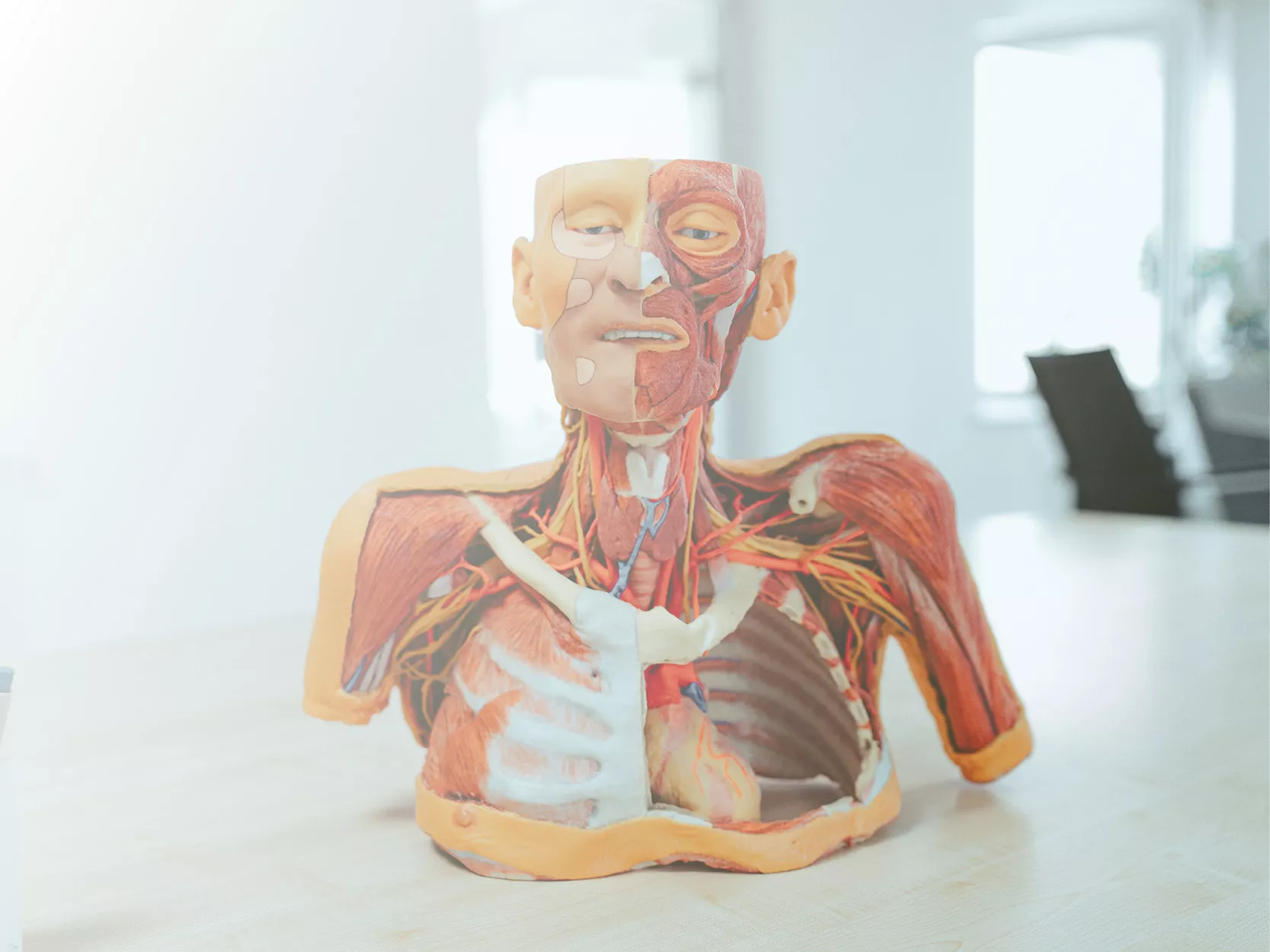
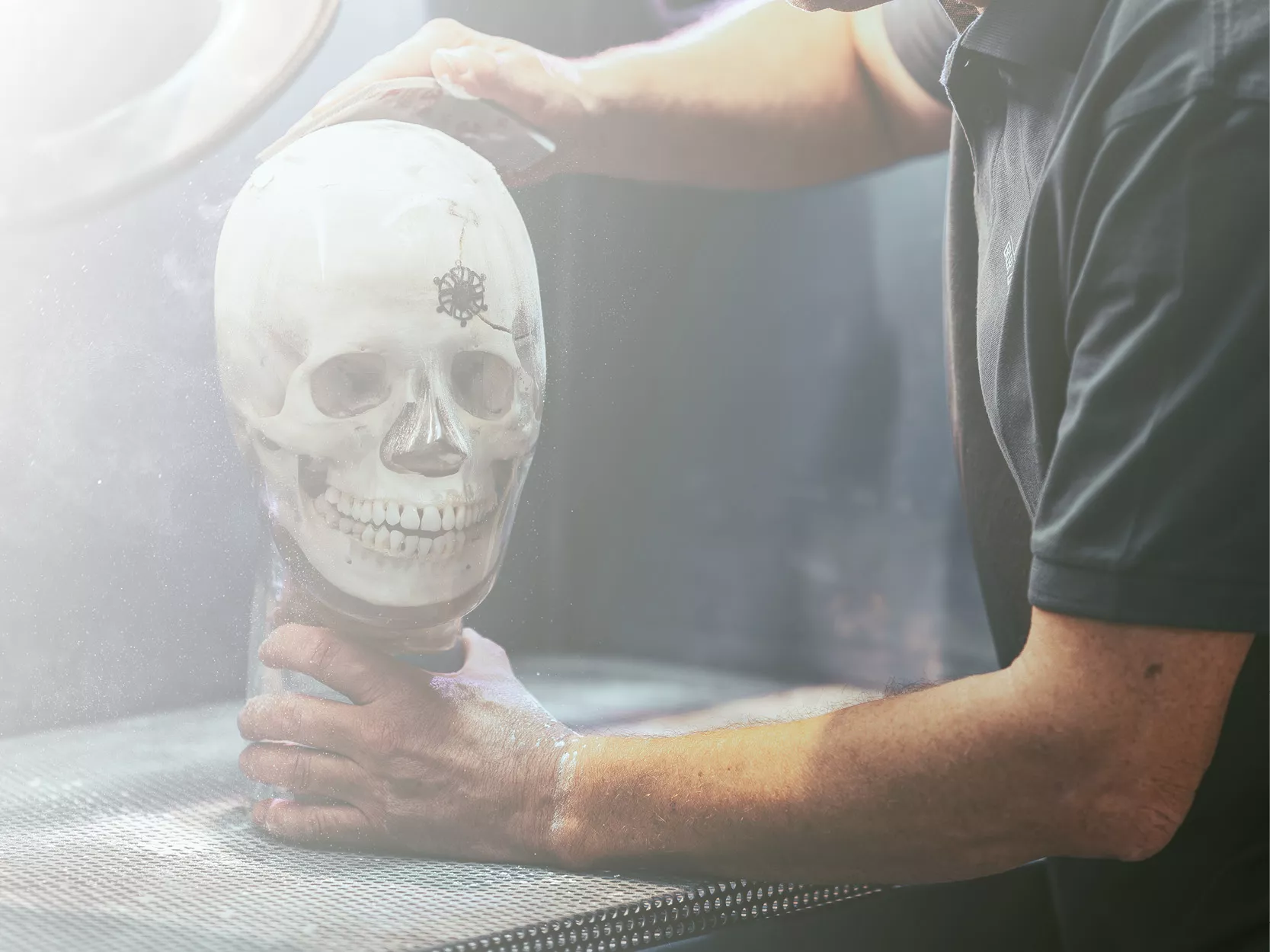
This phantom simulates a contrast medium enhanced head in arterial phase (CT angiography). It covers the vertex to the fifth cervical ver¬tebra. The right hemisphere has an arteriovenous malformation.
The phantom can be used in CT (including CBCT) to evaluate and optimize imaging performance and AI-enabled diagnosis. It is also suited for training purposes.
Size (mm): 186 x 224 x 269 mm
The phantom can be used in CT (including CBCT) to evaluate and optimize imaging performance and AI-enabled diagnosis. It is also suited for training purposes.
Size (mm): 186 x 224 x 269 mm
Login
Erler-Zimmer
Erler-Zimmer Medical GmbH
Hauptstrasse 27
77886 Lauf
Germany
info@erler-zimmer.de
Achtung! Medizinisches Ausbildungsmaterial, kein Spielzeug. Nicht geeignet für Personen unter 14 Jahren.
Attention! Medical training material, not a toy. Not suitable for persons under 14 years of age.
Other customers also bought

Head Phantom “AMV and Lesion” for CT, X-ray and radiation therapy
This phantom simulates a contrast medium enhanced head in arterial phase (CT angiography). It covers the vertex to the foramen magnum.The phantom has 10 low-contrast lesions in the centrum semiovale and the right hemisphere has an arteriovenous malformation.The phantom can be used in CT (including CBCT) to evaluate and optimize imaging performance and AI-enabled diagnosis. It is also suited for training purposes. The phantom provides a detailed and realistic simulation of vascular structures, soft and bone tissue. Air voids are filled with a cellulosepolymer composite of approx. -160 HU.Diagnostic features:• Realistic simulation of head vessels, bone and soft tissues.• Arteriovenous malformation of the right hemisphere.• 5 rod-shaped lesions on each side in the centrum semiovale at the periventricular and supraventricular level.

Head and Neck Phantom for CT, X-ray and radiation therapy
This phantom simulates a contrast medium enhanced head in arterial phase (CT angiography). The neck and upper thorax are included up to the aortic arch and the fifth thoracic vertebra.The vertex is included until approximately 0.5 cm below skin level. The thoracic phantom section excludes shoulder and back parts that are typically not part of CTA examinations.The internal carotid artery has calcifications on both sides with moderate stenosis on the right side. Otherwise, the phantom has no significant vascular pathologies.The phantom can be used in CT (including CBCT) to evaluate and optimize CTA imaging performance and post-processing applications such as vessel segmentation, including AI-enabled applications. It is also nicely suited for training purposes.The phantom provides a detailed and realistic simulation of vascular structures, soft and bone tissues. Air voids are filled with a cellulose-polymer composite of approx. -160 HU.Diagnostic features• Realistic simulation of head and neck vessels up to the aortic arch, bone and soft tissues.• Calcifications of the internal carotid artery at the carotid bifurcation on both sides with mild stenosis on the right side.

Head and Neck Phantom “AVM and Lesion” for CT, X-ray and radiation therapy
This phantom simulates a contrast medium enhanced head in arterial phase (CT angiography). It covers the vertex to the fifth cervical vertebra.The phantom has 10 low-contrast lesions in the centrum semiovale and the right hemisphere has an arteriovenous malformation.The phantom can be used in CT (including CBCT) to evaluate and optimize imaging performance and AI-enabled diagnosis. It is also suited for training purposes.The phantom provides a detailed and realistic simulation of vascular structures, soft and bone tissue, including small details such as lymph nodes. Air voids are filled with a cellulose-polymer composite of approx. -160 HU.Diagnostic Features:• Realistic simulation of head vessels, bone and soft tissues.• Arteriovenous malformation of the right hemisphere.• 5 rod-shaped lesions on each side in the centrum semiovale at the periventricular and supraventricular level.

Head CTA Phantom
This phantom is created from real patient data and is manufactured using the latest technology. Bones, vessels and soft tissue are displayed authentically with realistic CT values ??for all tissues at 120 kVp tube voltage in the CT. If the phantom is to be used primarily with other tube voltages (e.g. 100 kVp), the calibration of the CT values ??can be adjusted accordingly if required. The phantom provides realistic tissue contrasts in X-ray imaging. Air spaces are filled by a material with about -80 Hounsfield units.The head phantom provides an extremely realistic simulation of a head and neck CT angiography (with arterial contrast) of a patient with an arteriovenous malformation on the right side. The phantom is delivered true to the original scale and includes the cervical spine up to the base plate of the fifth cervical vertebra.Size: 19 x 23 x 27cm

Head Phantom Stroke / Bleed
This phantom simulates a head with stroke and bleeding patterns. It covers the vertex to the foramen magnum.Stroke patterns include signs of early infarction (hyperdense middle cerebral artery, disappearing basal ganglia), acute and subacute watershed infarcts, and lacunar infarctions of varying ages.Bleeding patterns include subarachnoid hemorrhage, subdural hemorrhage of varying ages, intraventricular hemorrhage, and intracerebral hemorrhage.The phantom can be used in CT (including CBCT) to evaluate and optimize imaging performance and AI-enabled diagnosis.It is also suited for training purposes. The phantom provides a detailed and realistic simulation of common brain pathologies, soft and bone tissues. Air voids are filled with a cellulose-polymer composite of approx. -160 HU.Diagnostic featuresStroke:• Hyperdense middle cerebral artery (MCA) anddisappearing basal ganglia on the left side• Watershed infarcts in middle/posterior(MCA/PCA) and anterior/middle cerebralartery (ACA/MCA) territories• 8 lacunar infarcts of varying agesHemorrhage• Subarachnoid hemorrhage (2 territories)• Subdural hemorrhage of varying ages (3 territories)• Intraventricular hemorrhage (left lateral ventricle)• Intracerebral hemorrhage (2 thalamic, 6 subcortical)

Head phantom “AVM” for CT, X-ray and radiation therapy
This phantom simulates a contrast mediumenhanced head in arterial phase (CT angiography). It covers the vertex to the foramen magnum.The right hemisphere has an arteriovenous malformation.The phantom can be used in CT (including CBCT) to evaluate and optimize imaging performance and AI-enabled diagnosis. It is also suited for training purposes.The phantom provides a detailed and realistic simulation of vascular structures, soft and bone tissue, including small details such as lymph nodes. Air voids are filled with a cellulose-polymer composite of approx. -160 HU.Diagnostic Features:- Realistic simulation of head vessels, bone and soft tissues.- Arteriovenous malformation of the right hemisphere.

Hand phantom for CT, X-ray and radiation therapy
This phantom is created from real patient data and is manufactured using the latest technology. Bones, vessels and soft tissue are displayed authentically with realistic CT values ??for all tissues at 120 kVp tube voltage in the CT. If the phantom is to be used primarily with other tube voltages (e.g. 100 kVp), the calibration of the CT values ??can be adjusted accordingly if required. The phantom provides realistic tissue contrasts in X-ray imaging. Air spaces are filled by a material with about -80 Hounsfield units.The hand phantom provides an extremely realistic simulation of a hand. Pathologies (e.g. fractures, calcifications, bones and soft tissue tumors) can be integrated on request.Size: 6 x 11 x 20 cm

Breast Phantom for Mammography and Breast Tomosynthesis
Breast phantom with adipose and glandular tissue. This breast phantom was designed to simulate breast imaging in mammography and breast tomosynthesis. It represents a compressed breast of 4 cm thickness that can be placed under the compression paddle. This phantom provides a realistic simulation of breast imaging. It was developed for testing and optimizing dose and image quality and for training of medical and technical staff. The phantom is manufactured from virtual data* containing adipose and glandular tissue. The models are handmade unique piece, which can differ slightly in size and design. The phantom can be provided as one-piece anthropomorphic phantom or in a sectional design. Dosimeter openings and pathologic features can be included upon request.Size: 15 x 11 x 4 cm* References Breast Phantom:1. Graff, C.G., "A new open-source multi-modality digital breast phantom," Proc. SPIE 9783, 978309 (2016).2. Ikejimba, L.C., Graff, C.G., Rosenthal, S., Badal, A., Ghammraoui, B., Lo, J.Y. and Glick, S.J., “A novel physical anthropomorphic breast phantom for 2D and 3D x-ray imaging,” Medical Physics 44(2), 407-416 (2017).

Head phantom “Aneurysm” for CT, X-ray and radiation therapy
This phantom simulates a contrast medium enhanced head in arterial phase (CT angiography). It covers the vertex to the foramen magnum.The phantom has three intracranial aneurysms of the middle cerebral artery (MCA), anterior communicating artery (ACoA), and the basilar artery.The phantom can be used in CT (including CBCT) to evaluate and optimize imaging performance and AI-enabled diagnosis. It is also suited for training purposes.The phantom provides a detailed and realistic simulation of common brain pathologies, soft and bone tissues. Air voids are filled with a cellulose-polymer composite of approx. -160 HU.Diagnostic features - Aneurysms:• Middle cerebral artery (MCA)left side• Anterior communicating artery (ACoA)left side• Basilar arteryleft side

Foot phantom for CT, X-ray and radiation therapy
This phantom is created from real patient data and is manufactured using the latest technology. Bones, vessels and soft tissue are displayed authentically with realistic CT values ??for all tissues at 120 kVp tube voltage in the CT. If the phantom is to be used primarily with other tube voltages (e.g. 100 kVp), the calibration of the CT values ??can be adjusted accordingly if required. The phantom provides realistic tissue contrasts in X-ray imaging. Air spaces are filled by a material with about -80 Hounsfield units.The foot phantom provides an extremely realistic simulation of a foot. Pathologies (e.g. fractures, calcifications, bones and soft tissue tumors) can be integrated on request.Size: 10 x 12 x 25 cm

Continuous innovation

Social responsibility

Active customer orientation

Understanding quality

Sustainable actions

ISO 9001 certification