










Setting new standards in professional wound packing training
April 21, 2026
Four Wounds, One Goal: Maximum Bleeding Control with the Blood Brothers Wound Packing Trainer Set
Effective Bleeding Control in Emergency Medicine
Effective bleeding control is a top priority in modern emergency care. In the well-known cABCDE protocol, the management of life-threatening bleeding (c = critical bleeding) is increasingly prioritized, as uncontrolled bleeding can be fatal within minutes. In other protocols as well, such as the MARCH protocol used in tactical settings, hemostasis is the first priority (M = massive bleeding).
Rapid action is crucial, particularly in cases of penetrating injuries or deep soft tissue defects. In addition to tourniquets and direct pressure, wound packing has established itself as a key technique—especially for so-called junctional bleeding (e.g., groin or axilla), where traditional tourniquet systems cannot be used.
Wound Packing and Modern Hemostatics
In wound packing, the wound cavity is specifically filled with dressing material to apply direct pressure to the source of bleeding. In combination with modern hemostatics such as chitosan- or kaolin-based wound dressings, hemostasis can be significantly improved.
These findings are derived, among other sources, from military and preclinical studies on trauma care. The correct technique remains crucial—incorrect or too superficial packing often leads to inadequate hemostasis.
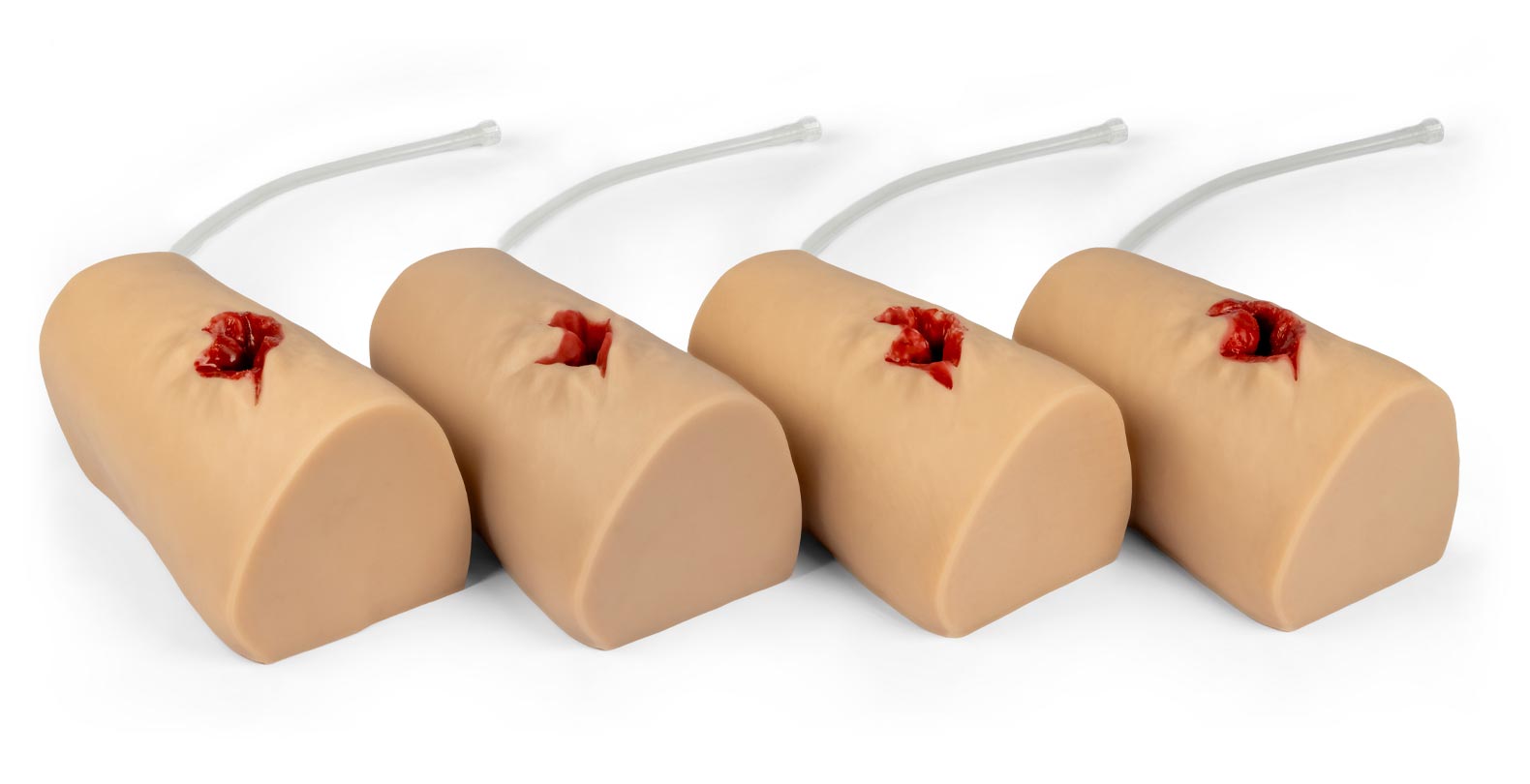
Realistic Training with the Blood Brother Wound Packing Trainer Set
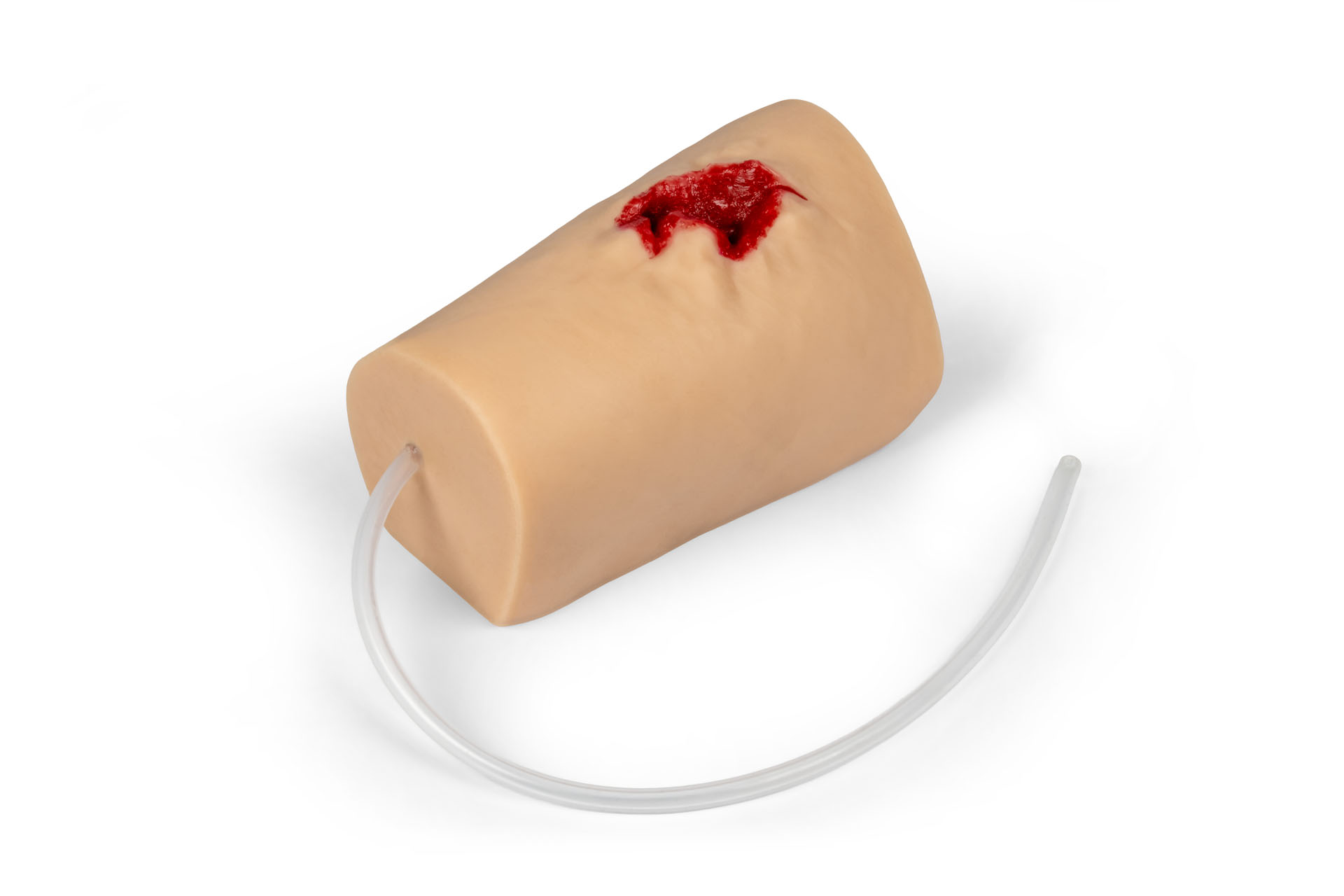
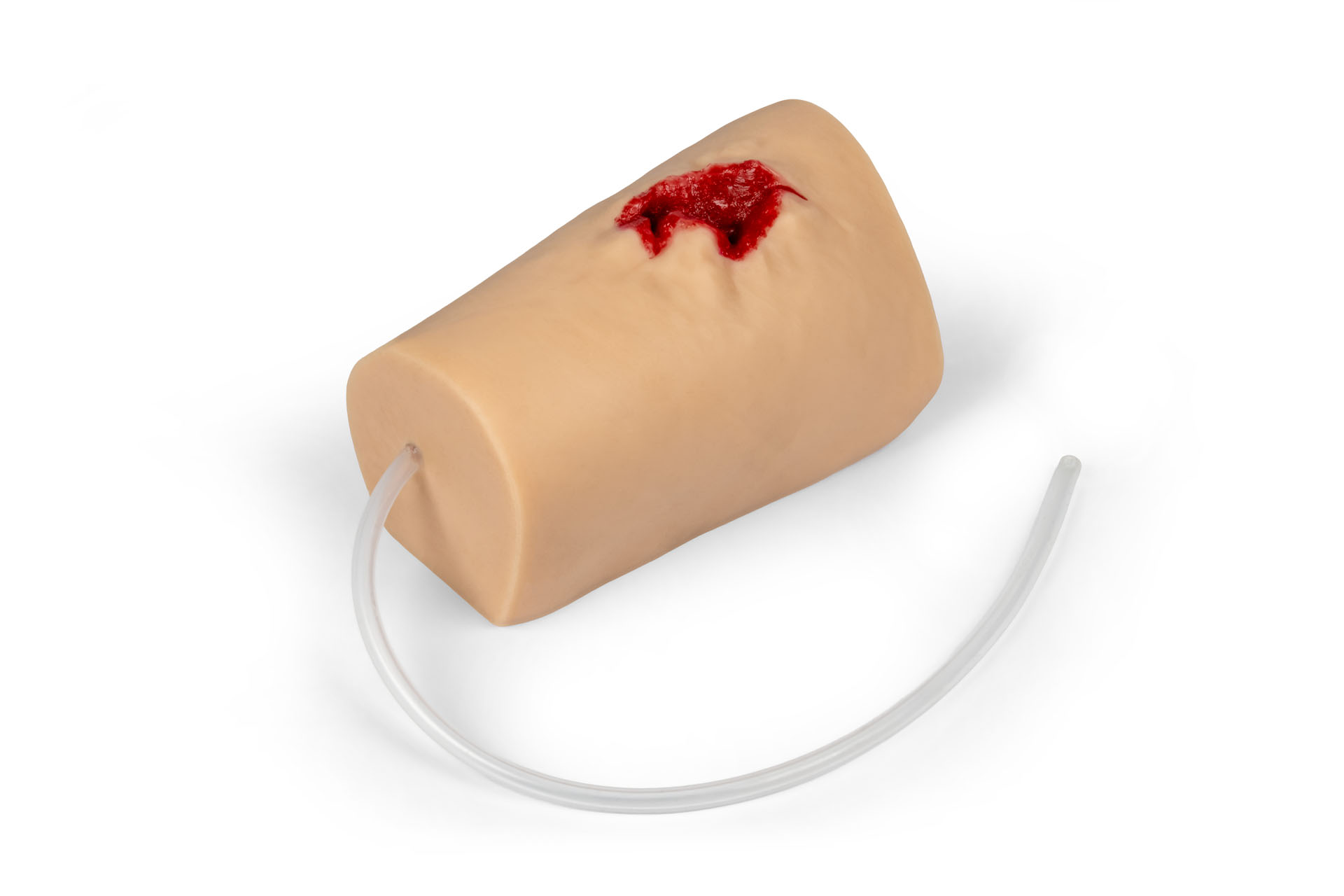
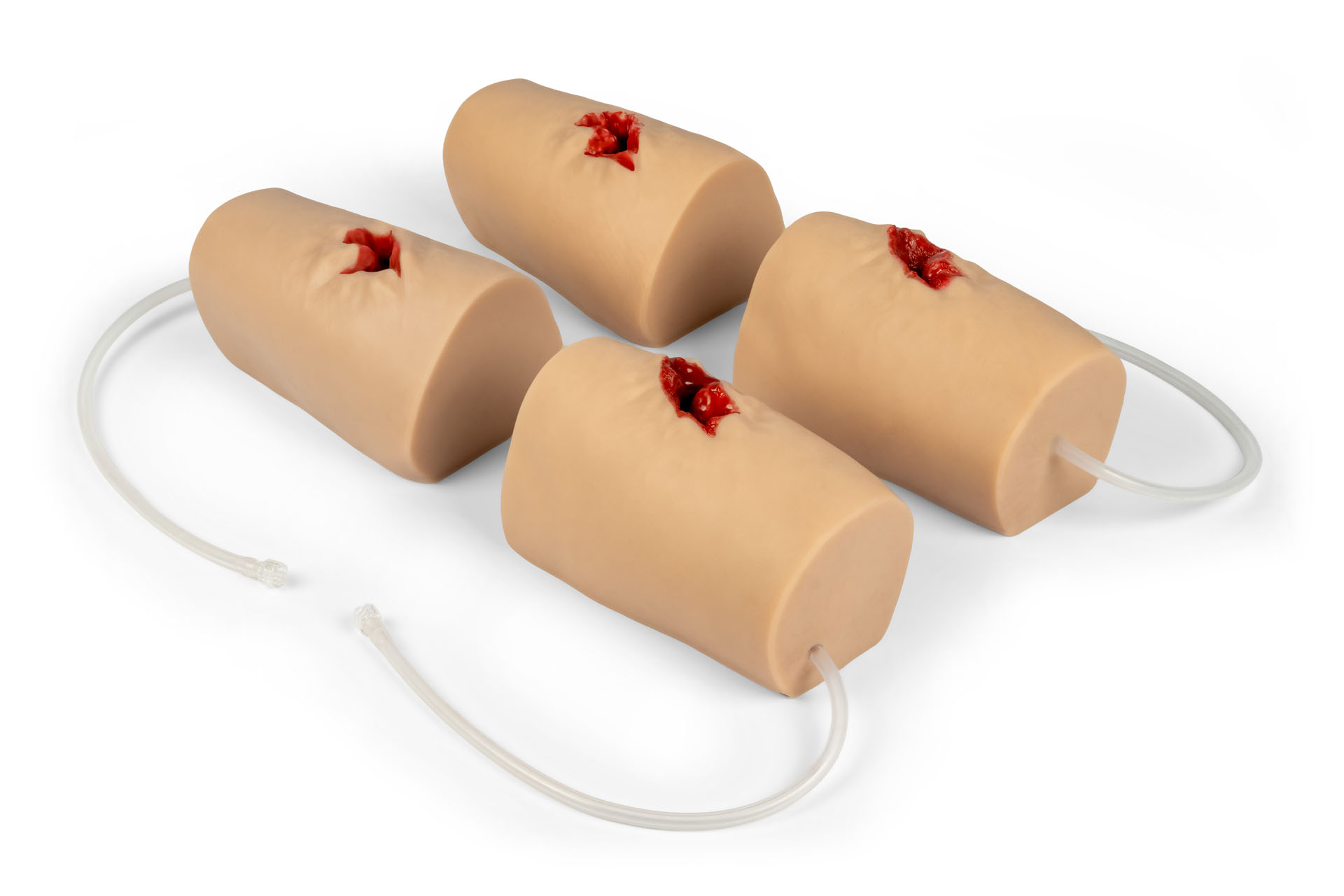
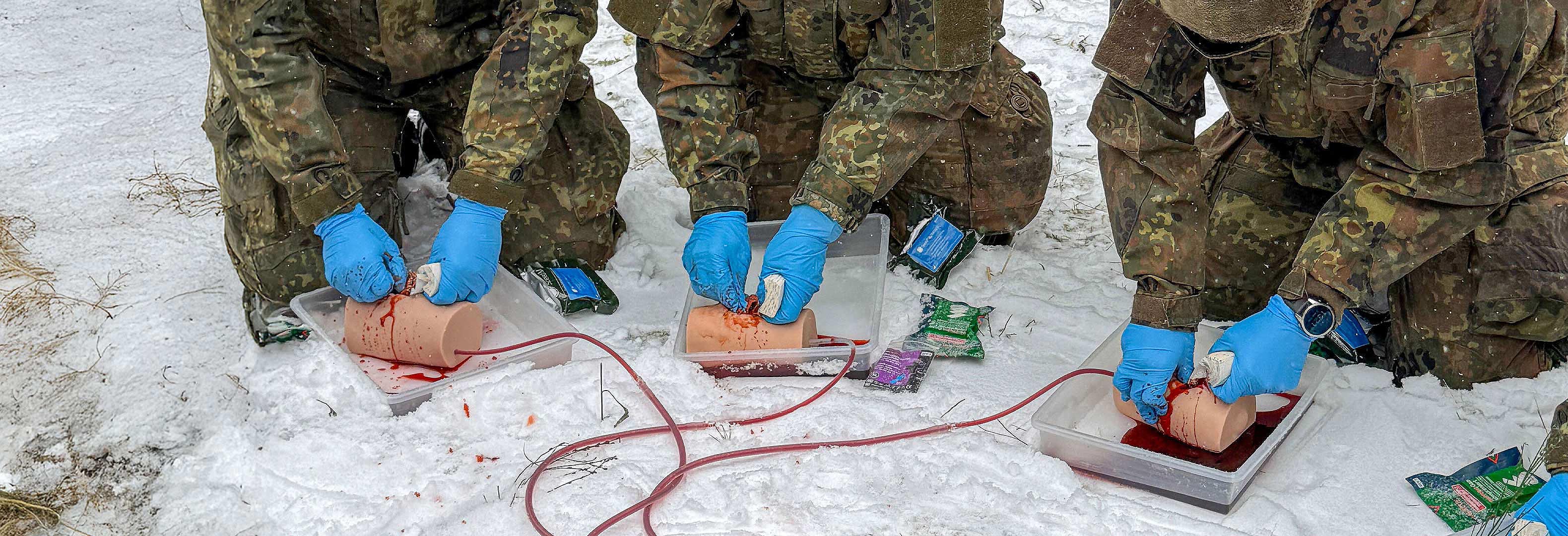
The Blood Brother Wound Packing Trainer Set from Erler-Zimmer Medical was specifically designed to provide realistic training in bleeding control and wound tamponade.
Four different models (Bob, Bill, Brad, Ben) enable practical training scenarios:
• Linear wounds
• Deep cavernous injuries
• Complex wounds with bone simulation
• Various anatomical challenges
The skin-like silicone provides realistic tactile feedback. Artificial blood can be introduced via a Luer-Lock connector, and optional pumps can be used to simulate a pulsating blood flow—a crucial factor for realistic, stress-inducing training.
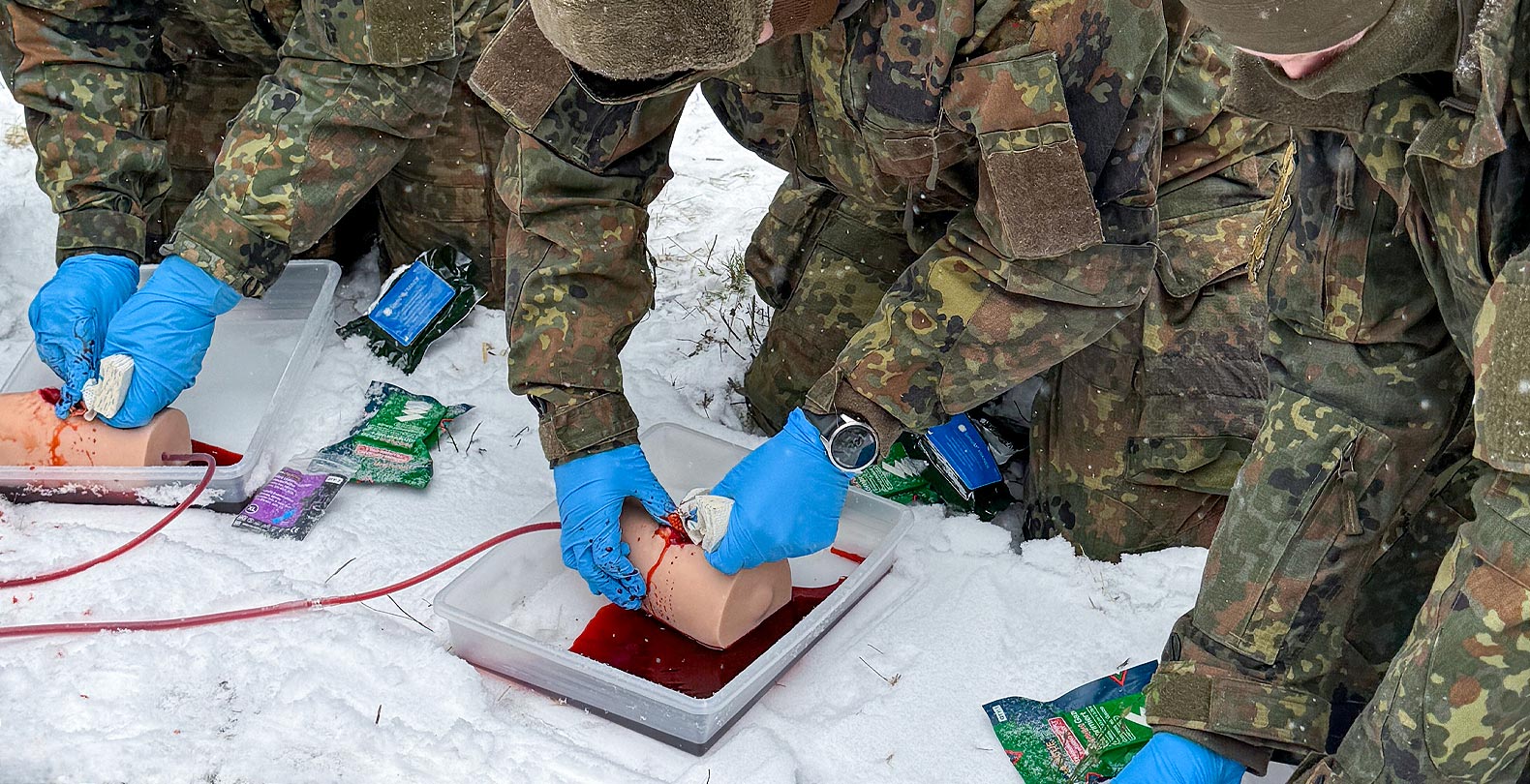
Training in proper wound packing technique
The training set enables the complete implementation of evidence-based care:
1. Wound inspection and identification of the source of bleeding
2. Application of a suitable hemostatic agent
3. Deep, layer-by-layer insertion of gauze (“wound packing”)
4. Continuous manual pressure (several minutes)
5. Application of a stable pressure bandage
Particularly important: the consistent build-up of pressure over time—a crucial factor for stable clot formation that is often underestimated in training.
Simulation training improves confidence in performing procedures
Through repeated training with the Wound Packing Trainer, users develop what is known as procedural muscle memory. This is crucial for being able to apply the technique confidently even under stress.
Simulations lead to:
• Higher success rate in hemostasis
• Faster execution of procedures
• Greater confidence in critical emergency situations
The models are reusable, durable, and easy to clean—ideal for regular training sessions in emergency medical services, hospitals, or military units.
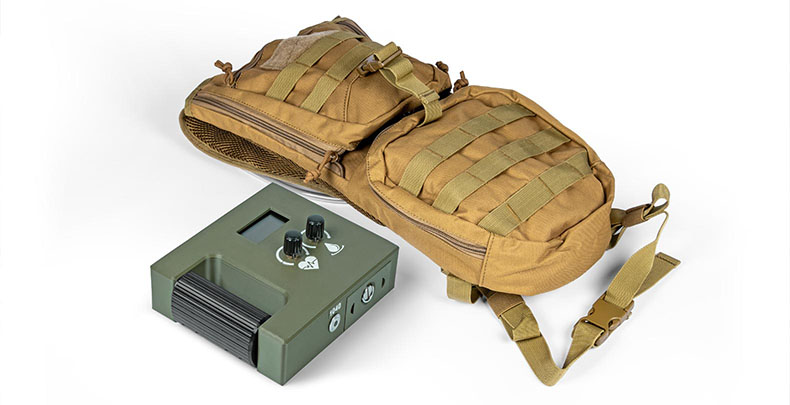
Expansion options for realistic training scenarios
For even more realistic training, additional components can be integrated:
• Distributor for simultaneous use by multiple trainers
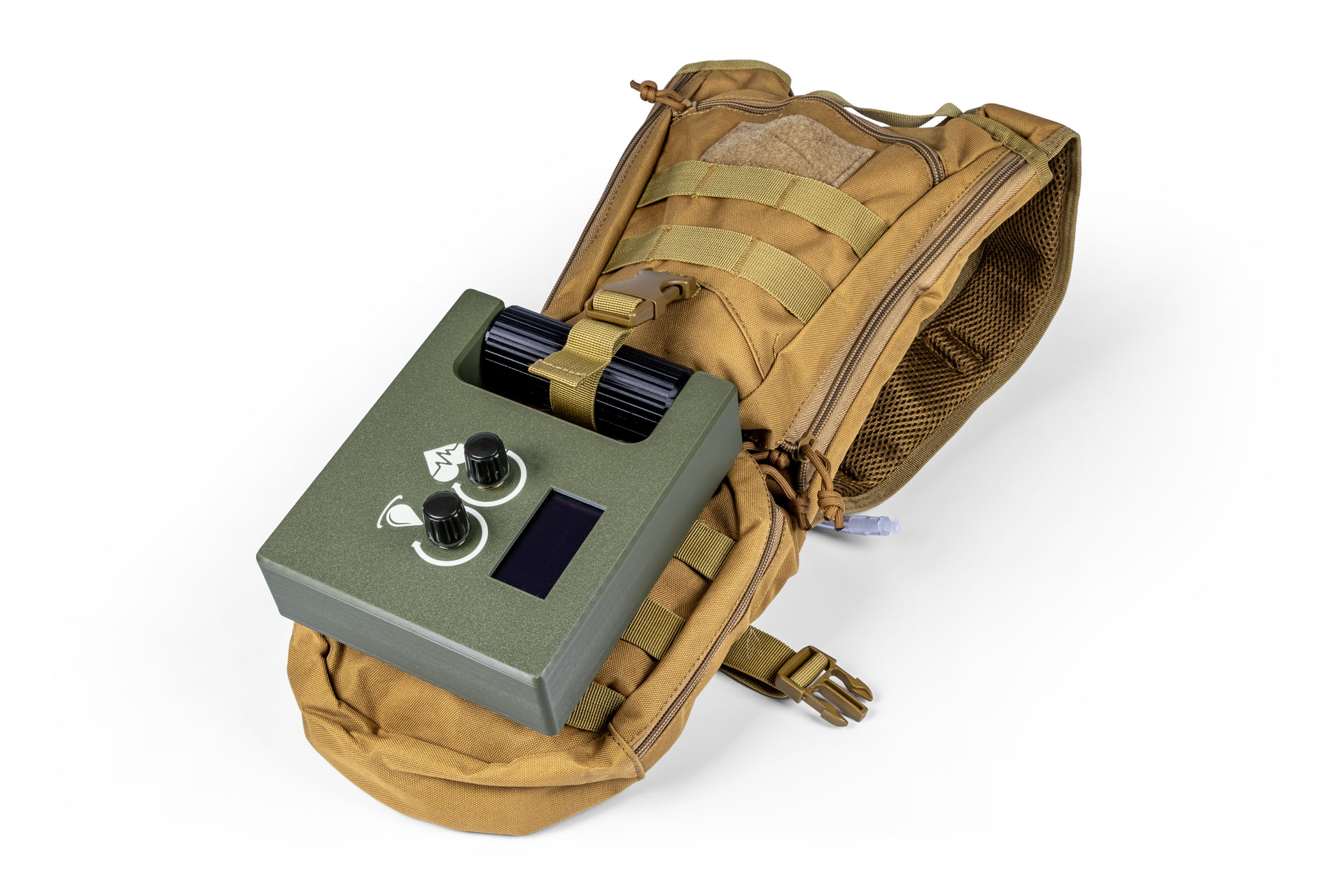
• Electronic blood pump systems (e.g., Bloody M.A.R.C. 2.0)
• Combination with tourniquet trainers (Trauma leg „Tim“ or arm „Tina“)
This allows for the simulation of complete trauma and emergency scenarios.
Conclusion: Wound Packing Trainer for Professional Emergency Training
The Blood Brother Wound Packing Trainer Set combines realistic simulation with a variety of wound types. It enables effective training in bleeding control, particularly wound tamponade for critical injuries.
For instructors in emergency medical services, hospitals, or the military, it provides an ideal foundation for teaching life-saving techniques in a realistic and effective manner.
👉 Are you ready to take your training to the next level?
Contact us here.
Effective Bleeding Control in Emergency Medicine
Effective bleeding control is a top priority in modern emergency care. In the well-known cABCDE protocol, the management of life-threatening bleeding (c = critical bleeding) is increasingly prioritized, as uncontrolled bleeding can be fatal within minutes. In other protocols as well, such as the MARCH protocol used in tactical settings, hemostasis is the first priority (M = massive bleeding).
Rapid action is crucial, particularly in cases of penetrating injuries or deep soft tissue defects. In addition to tourniquets and direct pressure, wound packing has established itself as a key technique—especially for so-called junctional bleeding (e.g., groin or axilla), where traditional tourniquet systems cannot be used.
Wound Packing and Modern Hemostatics
In wound packing, the wound cavity is specifically filled with dressing material to apply direct pressure to the source of bleeding. In combination with modern hemostatics such as chitosan- or kaolin-based wound dressings, hemostasis can be significantly improved.
These findings are derived, among other sources, from military and preclinical studies on trauma care. The correct technique remains crucial—incorrect or too superficial packing often leads to inadequate hemostasis.
Realistic Training with the Blood Brother Wound Packing Trainer Set
The Blood Brother Wound Packing Trainer Set from Erler-Zimmer Medical was specifically designed to provide realistic training in bleeding control and wound tamponade.
Four different models (Bob, Bill, Brad, Ben) enable practical training scenarios:
• Linear wounds
• Deep cavernous injuries
• Complex wounds with bone simulation
• Various anatomical challenges
The skin-like silicone provides realistic tactile feedback. Artificial blood can be introduced via a Luer-Lock connector, and optional pumps can be used to simulate a pulsating blood flow—a crucial factor for realistic, stress-inducing training.
Training in proper wound packing technique
The training set enables the complete implementation of evidence-based care:
1. Wound inspection and identification of the source of bleeding
2. Application of a suitable hemostatic agent
3. Deep, layer-by-layer insertion of gauze (“wound packing”)
4. Continuous manual pressure (several minutes)
5. Application of a stable pressure bandage
Particularly important: the consistent build-up of pressure over time—a crucial factor for stable clot formation that is often underestimated in training.
Simulation training improves confidence in performing procedures
Through repeated training with the Wound Packing Trainer, users develop what is known as procedural muscle memory. This is crucial for being able to apply the technique confidently even under stress.
Simulations lead to:
• Higher success rate in hemostasis
• Faster execution of procedures
• Greater confidence in critical emergency situations
The models are reusable, durable, and easy to clean—ideal for regular training sessions in emergency medical services, hospitals, or military units.
Expansion options for realistic training scenarios
For even more realistic training, additional components can be integrated:
• Distributor for simultaneous use by multiple trainers
• Electronic blood pump systems (e.g., Bloody M.A.R.C. 2.0)
• Combination with tourniquet trainers (Trauma leg „Tim“ or arm „Tina“)
This allows for the simulation of complete trauma and emergency scenarios.
Conclusion: Wound Packing Trainer for Professional Emergency Training
The Blood Brother Wound Packing Trainer Set combines realistic simulation with a variety of wound types. It enables effective training in bleeding control, particularly wound tamponade for critical injuries.
For instructors in emergency medical services, hospitals, or the military, it provides an ideal foundation for teaching life-saving techniques in a realistic and effective manner.
👉 Are you ready to take your training to the next level?
Contact us here.
Related products