













Female Reproductive Pathology
4
Products
Carcinoma of Breast
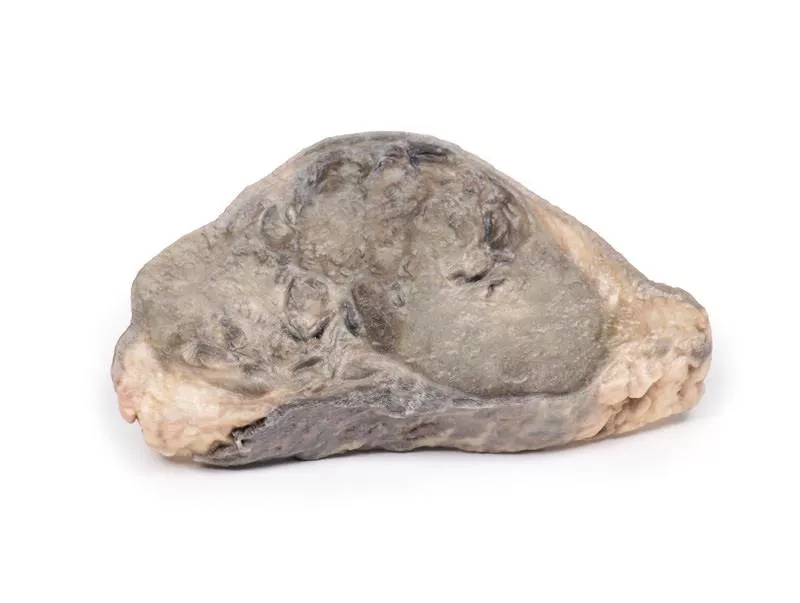
Clinical HistoryA 76-year-old woman was admitted to the emergency department with a sudden loss of consciousness and signs of a left-sided stroke. She was intubated and treated in the ICU, where a fixed mass was noted in her left breast along with palpable axillary lymphadenopathy. She later died from pneumonia related to mechanical ventilation.PathologyThe specimen shows the left breast with a large, oval tumour mass (11?cm), located beneath and attached to the skin and adherent to the muscle. The cut surface is heterogeneous, showing areas of necrosis, haemorrhage, and cyst formation. Histology confirmed a breast adenocarcinoma with regional lymph node involvement.Further InformationBreast cancer is the second most common cancer in women and mainly affects those over 30, peaking between 70 and 80 years. Risk factors include estrogen exposure, family history, nulliparity, obesity, and mutations in genes such as BRCA1, BRCA2, and others.Most cases are adenocarcinomas originating in the duct or lobular system, often first appearing as DCIS. Subtypes are defined by hormone receptor status (ER) and HER2 expression, which guide treatment. Common metastatic sites are bone, liver, lung, and brain.In countries with screening programs, most cases are found by mammography. Symptomatic signs include a hard, irregular, immobile mass, skin changes like dimpling (peau d’orange), and nipple retraction.Treatment varies by stage and tumour profile and may include mastectomy, lumpectomy, radiotherapy, targeted therapies (e.g. trastuzumab for HER2+), anti-estrogen therapy (e.g. tamoxifen for ER+), and systemic chemotherapy.

Endometrial Carcinoma
Clinical HistoryA 63-year-old woman presented with dull lower abdominal pain lasting two months and persistent heavy vaginal bleeding for one week, 13 years after menopause. Following a biopsy-confirmed diagnosis of endometrial carcinoma, she underwent radical abdominal hysterectomy and bilateral salpingo-oophorectomy as part of her treatment.PathologyThe specimen includes uterus, fallopian tubes, and ovaries. The endometrial lining shows significant abnormalities, especially on the right side, where a brown polypoid tumour has invaded the myometrium and extended into the cervical canal. Histology confirmed a well-differentiated endometrial adenocarcinoma. The left ovary is enlarged and contains multiple large follicular cysts.Further InformationEndometrial carcinoma is the most common gynecologic cancer in developed countries. It exists mainly in two types: endometrioid carcinoma (around 80% of cases), which often arises from atypical hyperplasia and presents early with better prognosis, and serous carcinoma, which is less common and more aggressive.Common mutations include PTEN, PIK3Ca, ARID1A in endometrioid tumours and TP53 in serous types. Risk factors for endometrioid carcinoma include obesity, glucose intolerance, infertility, and unopposed estrogen exposure. Serous carcinoma typically affects older women with lower BMI and atrophic uterus. Women with Lynch Syndrome also have a significantly increased risk.Post-menopausal bleeding is the most frequent symptom, allowing early detection. Some cases are asymptomatic or found incidentally. Imaging shows thickened endometrium on ultrasound or CT. Diagnosis is confirmed via biopsy, curettage or hysterectomy. Treatment depends on stage and includes surgery, radiotherapy and chemotherapy.

Uterine Leiomyoma
Clinical History A 30-year-old woman presented with infertility, pelvic pain, heavy bleeding and dysmenorrhea. A pelvic mass was palpable and ultrasound showed a hypoechoic lesion in the myometrium. A planned myomectomy was converted to an emergency hysterectomy due to complications. She recovered well.Pathology The uterus (with cervix and fundus) is sectioned sagittally. A 4?×?2?cm ovoid mass arises from the posterior uterine wall, protruding into the cavity and reaching the cervical canal.Further Information Uterine leiomyomas (fibroids) are benign smooth muscle tumors, common in women of reproductive age, especially among Black women. They may cause bleeding, pelvic pressure, infertility, and complications in pregnancy. Diagnosis is by ultrasound. Treatment options include hormonal therapy, myomectomy, hysterectomy and uterine artery embolisation.
Uterus Bicornuate Unicollis
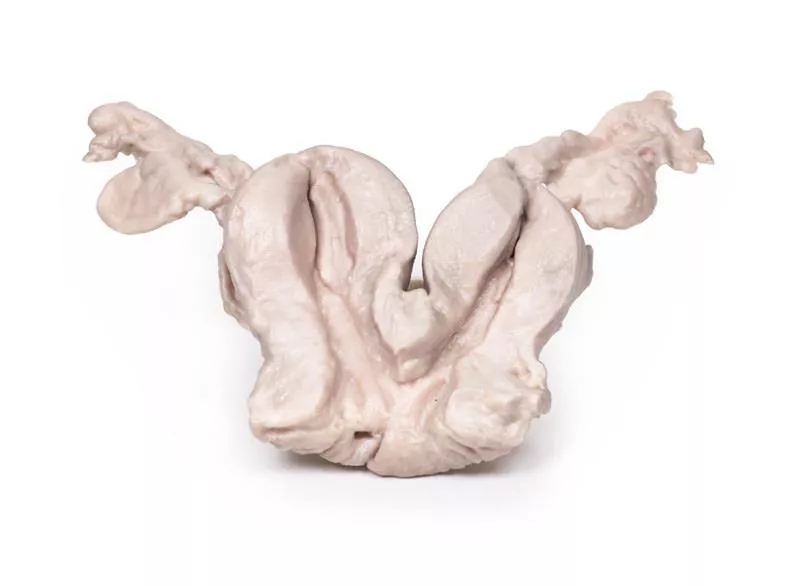
Clinical HistoryA 36-year-old woman experienced a severe postpartum hemorrhage following the breech delivery of her fourth child. All her previous three deliveries were also breech, and there was no history of miscarriage. She had a background of intermittent mild abdominal pain. As the bleeding could not be controlled, the obstetric team performed an emergency radical hysterectomy with bilateral salpingo-oophorectomy. Both mother and child made a full recovery.PathologyThe specimen includes a bicornuate uterus, fallopian tubes, and ovaries, sliced coronally to show both internal and external surfaces. The two uterine bodies are of equal size and share a single cervical canal. A few small cervical cysts are visible.Further InformationA bicornuate uterus is a congenital malformation in which the uterine fundus has an indentation greater than 1 cm. While the cervix and vagina are usually normal, the uterus typically contains two partially separated endometrial cavities due to incomplete fusion of the Müllerian ducts during embryonic development.This condition affects approximately 0.5% of women, though the actual number may be higher, as many are asymptomatic. Symptoms, when present, may include pelvic pain (cyclic or non-cyclic), abnormal bleeding, discharge, or urinary tract infections.In pregnancy, a bicornuate uterus is associated with increased risk of recurrent miscarriage, preterm labour, fetal malpresentation, growth restriction, and placenta previa. Malpresentation often necessitates a caesarean section. After birth, there is a higher risk of placental retention and postpartum hemorrhage.Diagnosis is usually made via pelvic ultrasound; MRI may be used in select cases to confirm the diagnosis. Most cases do not require treatment.
Human body replicas to improve teaching!
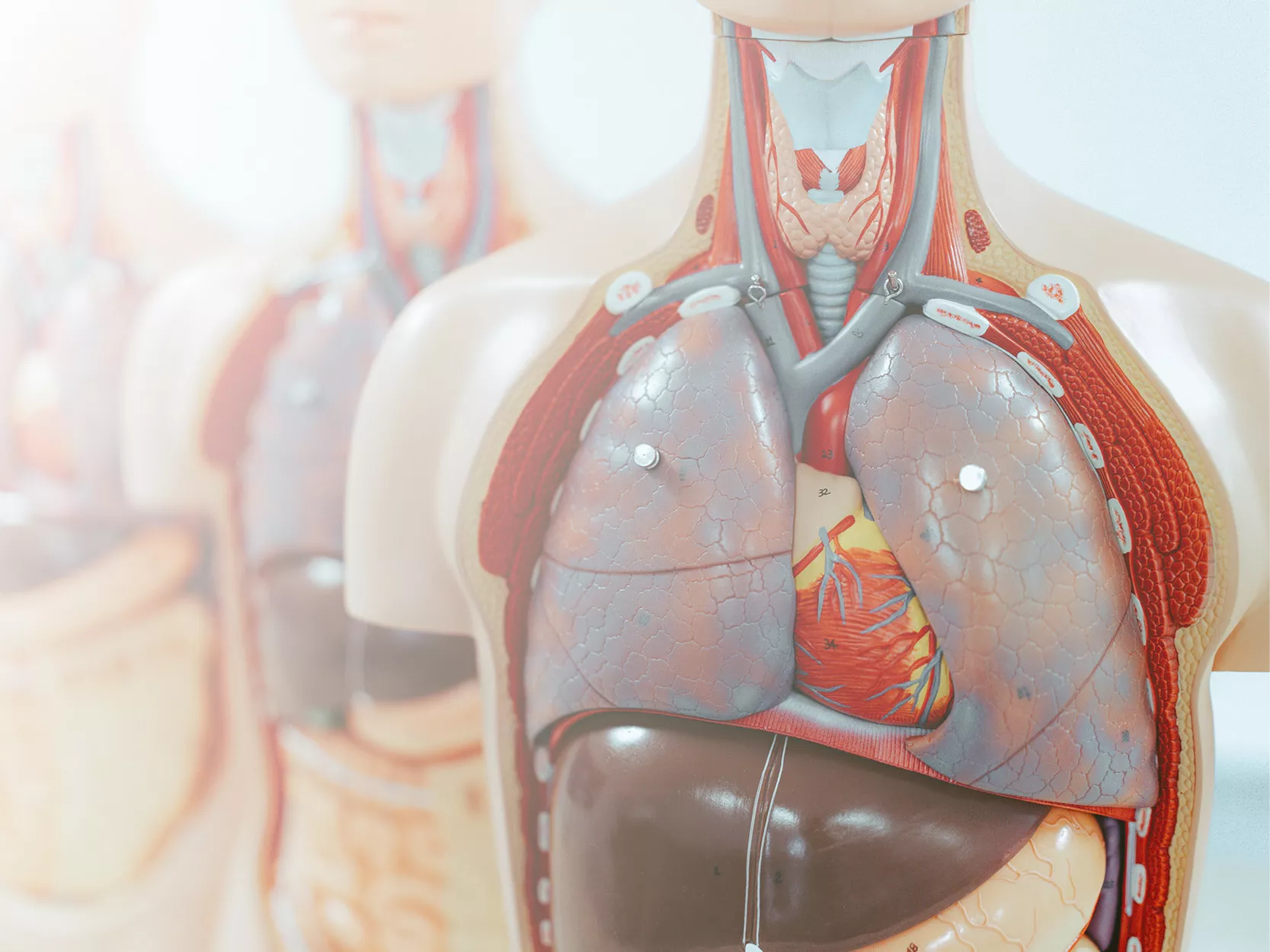
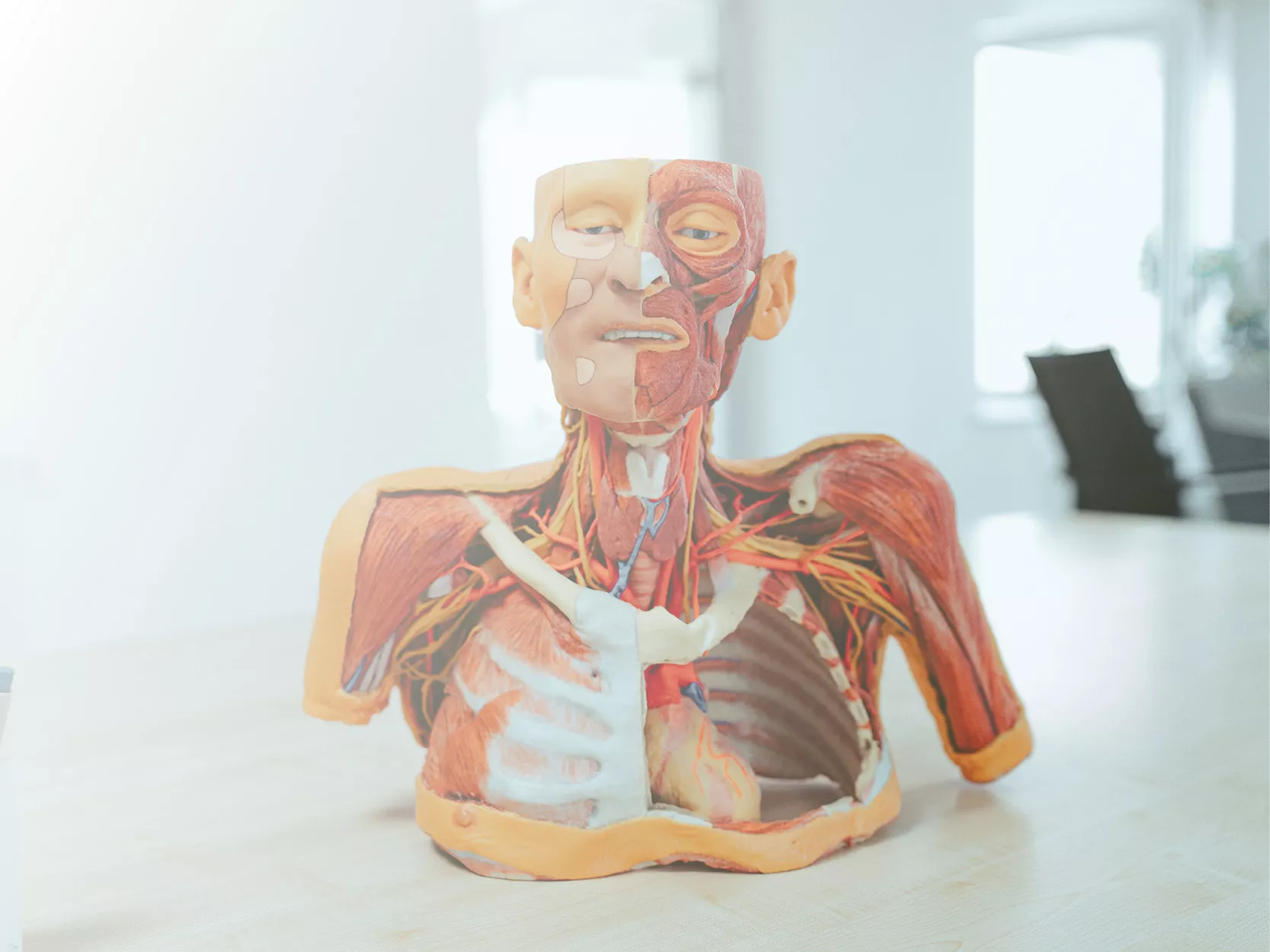
Erler-Zimmer's groundbreaking Anatomy Series features a unique and unrivalled collection of colourised human body replicas specifically designed to enhance teaching and learning. This premium collection of highly accurate human anatomy has been created directly from radiological data or real specimens using the latest imaging techniques. The 3D Human Anatomy Series offers a cost-effective way to meet your specific teaching and demonstration needs across the curriculum in medicine, health sciences and biology. A detailed description of the anatomy represented in each 3D printed specimen is included. What are the advantages of the Monash 3D Anatomy Series compared to plastic models or real human plastinates?
Each body replica has been carefully developed from selected radiological patient data or dissected human bodies of the highest quality, chosen by a highly skilled team of anatomists at Monash University's Human Anatomy Teaching Centre, to represent clinically important areas of anatomy in a quality and detail not possible with conventional models - it is real anatomy, not stylised. Each body replica has been rigorously checked by the highly qualified team of anatomists at Monash University's Human Anatomy Teaching Centre to ensure the anatomical accuracy of the final product. The body replicas are not real human tissue and are therefore not subject to any restrictions on transport, import or use in educational institutions that do not have permission to use cadavers. The
exclusive 3D Anatomy Series avoids these and other ethical issues that arise when dealing with plastinated human remains.